Designing B2B Influencer Marketing Visuals for Maximum Engagement
Learn how to design high-converting b2b influencer marketing visuals. Create co-branded assets that creators actually want to share on their social feeds.
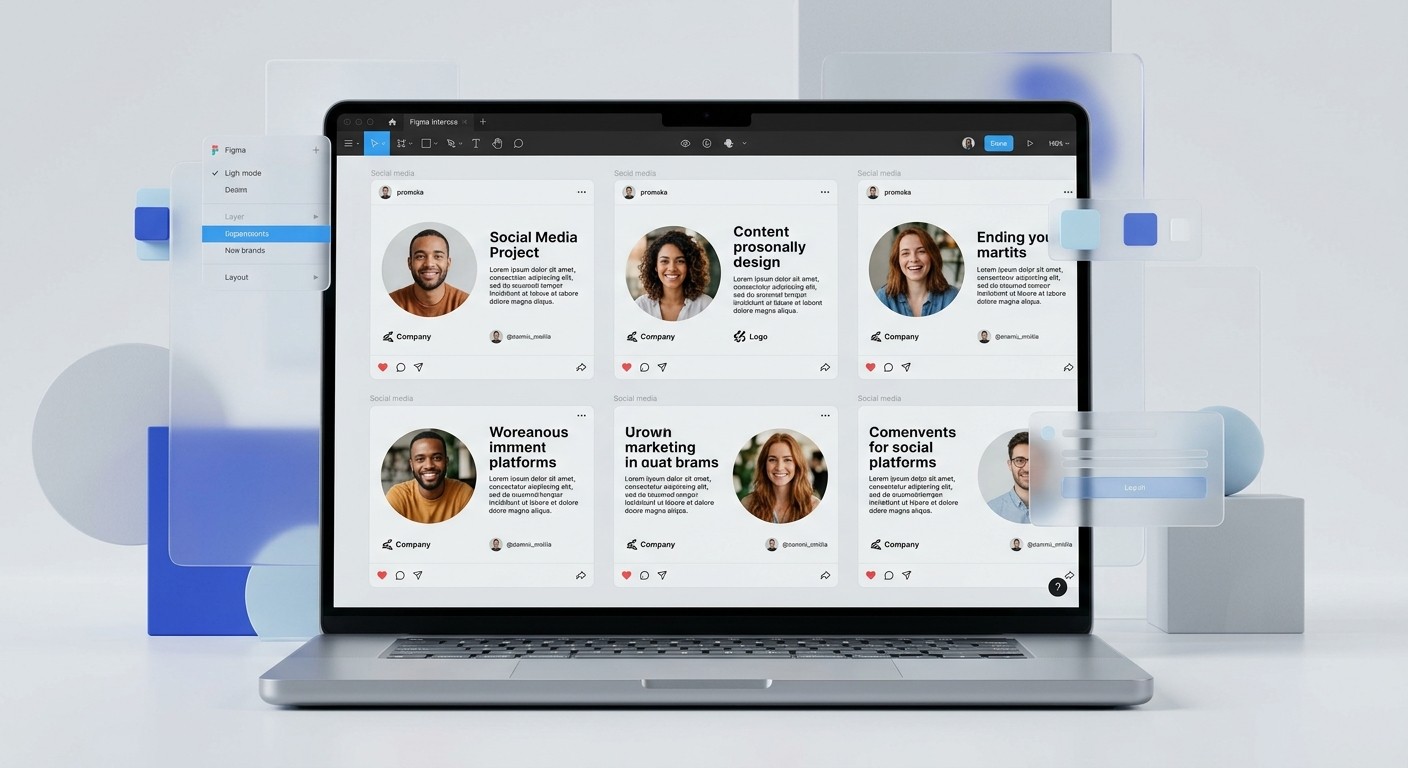
Successful b2b influencer marketing visuals prioritize the creator’s personal brand aesthetic over corporate rigidness. To get influencers to post your content, you must provide flexible, high-quality Figma templates that allow for co-branding without clutter. Effective design in this space focuses on readability, minimalist layouts, and clear value-driven headlines.
B2B influencer marketing visuals are the graphic assets used in collaborative campaigns between a brand and a subject matter expert. These include LinkedIn carousels, Twitter headers, and Instagram graphics designed to highlight a partnership. The primary goal is to blend the authority of the creator with the product solutions of the company.
The global influencer marketing market reached 21.1 billion dollars in 2023 and is projected to continue growing as brands shift budgets toward individual voices (Statista, 2024). In the B2B sector, this growth is driven by the need for trust. Modern buyers trust individual practitioners more than they trust corporate logos. If your visuals look like a generic corporate advertisement, the creator will likely refuse to post them or your audience will ignore them.
Why are b2b influencer marketing visuals different from standard ads?
The primary difference is the source of authority. Standard ads prioritize the brand voice, while b2b influencer marketing visuals prioritize the creator voice. When an influencer shares content, it must feel like an extension of their usual feed. If the design is too corporate, it triggers "banner blindness" and hurts the creator’s credibility with their audience.
A survey of B2B marketers found that 75% are now using influencer marketing to build brand awareness and reach new audiences (Ogilvy, 2024). These marketers realize that co-branded social assets must be a collaboration, not a mandate. You are designing a platform for the influencer to speak, not just a billboard for your software. This requires a shift from heavy branding to a minimalist, design-first approach that highlights the shared expertise of both parties.
To succeed, your partner marketing design strategy should focus on a 50/50 split of brand identity. We recommend using the creator's headshot as the focal point and your brand's typography for the body text. This creates a visual bridge between the two entities. The result is a post that looks professional enough for a SaaS company but authentic enough for a personal brand creator.
How do you design co-branded social assets that creators want to post?
To design assets that creators actually use, you must give up control over specific brand elements like background colors or font sizes. Creators protect their aesthetic because it is their primary asset. By providing editable Figma files instead of static PNGs, you allow them to adjust the template to fit their grid. This flexibility is the difference between a successful partnership and a failed campaign.
In our experience, the most successful b2b creator partnerships involve providing three distinct style options for every asset. One option should lead with the creator's brand colors, another with the company's colors, and a third that is a neutral, minimalist middle ground. This shows the partner that you value their brand as much as your own. It also reduces the friction of the approval process, as the creator feels like they have creative agency over the final output.
A recent study found that 49% of consumers depend on influencer recommendations for their purchase decisions (HubSpot, 2023). In a B2B context, this dependency is even higher for high-ticket software. If a saas influencer campaign uses visuals that look low-quality, it reflects poorly on both the tool and the person recommending it. Use high-resolution photography, plenty of white space, and professional-grade layouts to ensure the assets meet the standards of a premium brand.
What makes thought leader graphics effective on LinkedIn?
Effective thought leader graphics use a hierarchy that puts the insight before the brand. Start with a bold, controversial, or highly educational headline that takes up 40% of the first slide. The subsequent slides should use a mix of data visualizations and short, punchy text blocks. Avoid long paragraphs, as mobile users will skip them if they cannot scan the information in seconds.
LinkedIn carousels generate 3.2x more engagement than static image posts (Socialinsider, 2024). This is why we focus heavily on the carousel format for our B2B templates. A carousel allows you to tell a story or explain a complex concept step-by-step. It mimics the natural flow of a conversation, which is exactly what a thought leader is trying to achieve with their audience. When the design facilitates this flow, the influencer is much more likely to hit the publish button.
Table: Visual Elements for High-Engagement B2B Graphics
Element | Purpose | Best Practice |
|---|---|---|
Headshot | Humanizes the data | High-quality cutout with neutral background |
Headline | Stops the scroll | Bold, 80pt+ font size, sans-serif |
Brand Logo | Establishes partnership | Small, placed in the corner or last slide |
Social Proof | Builds trust | Small badges or text-based testimonials |
How can saas influencer campaigns benefit from design templates?
Templates speed up the production cycle by removing the need for a custom designer for every post. When you launch a campaign with 10 different influencers, designing 10 custom sets of graphics is a logistical nightmare. Templates allow you to swap out headshots, names, and quotes while keeping the core layout intact. This ensures that even though the content is customized for each creator, the campaign maintains a cohesive look.
We find that using a design system in Figma is the fastest way to scale these collaborations. By using design templates for social media, you can apply your brand’s color tokens and typography to dozens of slides instantly. This allows your marketing team to focus on the strategy of the campaign rather than the pixels of the individual assets. It also gives you a library of proven layouts that you know will perform well on social platforms.
Visual content is 40 times more likely to get shared on social media than other types of content (Buffer, 2023). This is especially true in B2B, where text-heavy posts are the norm. By breaking up the feed with professional, minimalist visuals, your influencer partners can stand out and drive more traffic to your landing pages.
What are the common mistakes in partner marketing design?
The most common mistake is over-branding the assets with large logos and corporate colors. This makes the content look like a paid advertisement, which reduces organic reach and engagement. Another mistake is using generic stock photos that do not match the influencer’s personal brand. It is always better to use real photos of the creator or high-quality abstract illustrations than it is to use a person in a suit shaking hands.
Research indicates that 86% of consumers say authenticity is important when deciding which brands they like and support (Stackla, 2022). In a B2B environment, authenticity is tied to the expertise of the people you partner with. If your partner marketing design looks manufactured or fake, it erodes the very trust you are trying to build. Keep your layouts clean, your fonts professional, and your message focused on the reader's problem rather than your software's features.
Another error is failing to optimize for the specific platform. A graphic that works on Twitter will likely fail on LinkedIn because the aspect ratios and audience behaviors are different. LinkedIn users prefer vertical 4:5 or 1:1 ratios for carousels. Twitter users respond better to 16:9 images for single posts. Always provide your influencer partners with the correct dimensions for their primary platform to ensure the content looks native and professional.
How do you measure the success of b2b influencer marketing visuals?
Success is measured by three key metrics: engagement rate, share rate, and lead quality. High-quality b2b influencer marketing visuals should drive a higher share rate because people want to be associated with premium, insightful content. If your visuals are being saved and shared into private Slack communities or LinkedIn messages, you have successfully created a high-value asset.
Data shows that posts with images receive 650% higher engagement than text-only posts (WebFX, 2023). For a B2B company, this engagement translates into more eyes on your product and more potential leads in your funnel. By providing influencers with visuals that are easy to consume and highly shareable, you are essentially providing them with a tool to grow their own audience while simultaneously growing yours. It is a mutually beneficial relationship built on good design.
To keep your design process efficient, we suggest creating a "Brand Kit" for each influencer campaign. This kit should include your Figma templates, a short style guide, and a library of approved brand assets. When the influencer has everything they need in one place, they are more likely to produce high-quality content that aligns with your campaign goals. This structured approach simplifies the creative process and ensures consistent quality across all partner channels.
References
Influencer Marketing Market Size Worldwide. Statista, 2024.
The 2024 B2B Influencer Marketing Report. Ogilvy, 2024.
LinkedIn Content Benchmarks and Engagement Rates. Socialinsider, 2024.
The State of Marketing Report. HubSpot, 2023.
The Power of Visual Content in Social Media Marketing. Buffer, 2023.
Post-Pandemic Consumer Behavior and the Importance of Authenticity. Stackla, 2022.
Social Media Marketing Statistics and Facts. WebFX, 2023.