Developing a Brand Visual Alignment Strategy Today for SaaS Growth
Learn how a brand visual alignment strategy ensures saas brand consistency. Scale your marketing design without losing visual quality as your team grows.
A brand visual alignment strategy is a framework that ensures all marketing assets match core design principles across every platform. It creates a centralized source of truth for colors, typography, and layout logic to prevent brand dilution during team expansion.
What is a brand visual alignment strategy?
A brand visual alignment strategy is a systematic approach to maintaining design integrity across all marketing channels. It involves defining specific visual rules and building an infrastructure that allows multiple team members to produce content that looks identical in quality and style. This strategy serves as the bridge between a founder's vision and a marketing team's execution.
Establishing this strategy is critical for startups moving beyond the founder-led phase. When a single person handles design, consistency is intuitive. As you scale to a five-person team, that intuition must be replaced by a visual identity system. This system ensures that a social media manager, a content writer, and a growth lead can all produce assets that reinforce the brand rather than weaken it.
Maintaining brand consistency across all platforms can increase revenue by up to 23% (Lucidpress, 2021). For a scaling startup, this means that visual alignment is not just an aesthetic choice but a direct contributor to the bottom line. When a brand presents a unified front, it builds trust with prospects who require multiple touchpoints before making a purchase decision. A brand visual alignment strategy provides the necessary constraints to ensure that as the marketing team grows from one founder to five specialists, the visual output remains indistinguishable from the original high-quality standard. Without these guardrails, the cost of design debt grows exponentially as each new hire introduces their own interpretations of the brand style. Implementing a formal strategy early prevents the need for a total rebrand later in the company lifecycle when the stakes and costs are significantly higher (Lucidpress, 2021).
Why is saas brand consistency hard to maintain during team growth?
The primary challenge in saas brand consistency is the decentralization of creative production. In a small team, the speed of execution often takes priority over brand adherence. Without a brand visual alignment strategy, team members use different fonts, slightly varied color hex codes, or inconsistent spacing, which creates a fractured brand image.
Design debt accumulates when teams prioritize shipping over systems. Every inconsistent post on LinkedIn or Instagram adds up, eventually making a premium SaaS product look amateur. This inconsistency signals a lack of attention to detail that can worry enterprise buyers who equate design quality with product reliability.
Color alone improves brand recognition by 80% (University of Loyola, 2022). When different team members use slightly different shades or saturations, they actively confuse the audience's subconscious recognition of the brand. This issue is magnified in B2B environments where buyers consume 3 to 5 pieces of content before ever engaging with a salesperson (Demand Gen Report, 2023). If those five pieces of content look like they came from five different companies, the trust loop is broken. A brand visual alignment strategy solves this by standardizing every visual variable before the first asset is ever created. This proactive approach allows teams to scale without the friction of constant design reviews or corrective edits. Consistency is the byproduct of a well-engineered system, not just a result of talented individuals working in isolation (University of Loyola, 2022).
How do you build a visual identity system for a 5-person marketing team?
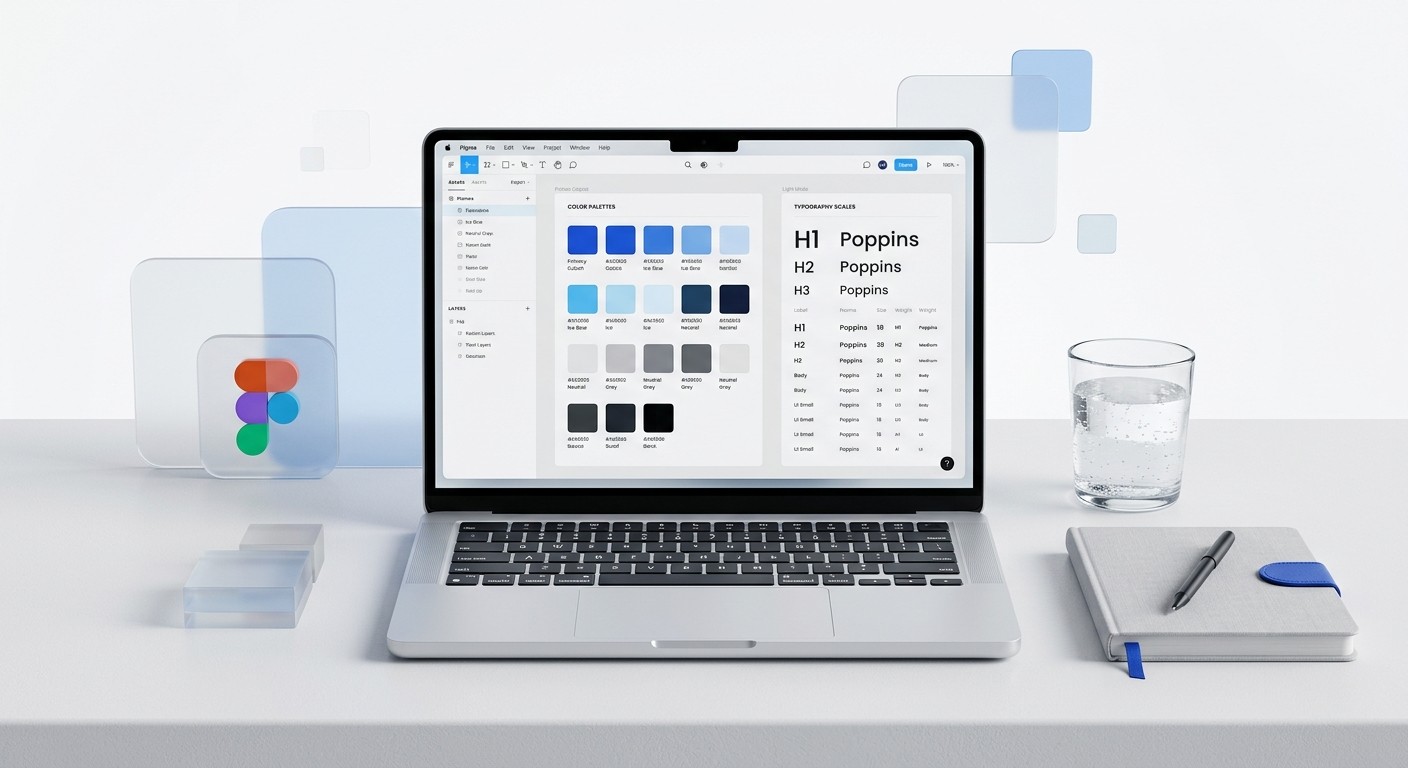
A visual identity system is a collection of components, tokens, and templates that make design production repeatable. It starts by moving away from static PDF style guides and moving toward live design environments like Figma. This shift allows the team to use the same assets the designers use, ensuring total b2b design cohesion.
We recommend building a library of pre-approved components. These components should include headline styles, button states, and layout grids. When your marketing team needs a new social media post, they do not start with a blank canvas; they select from a menu of approved options.
Growth Stage | Design Method | Primary Risk |
|---|---|---|
Founder-led | Ad-hoc creation | Founder burnout |
Early Team (2-3) | Shared Folders | Version control issues |
Scaling Team (5+) | Visual Identity System | System rigidity |
In our experience, founders who invest in a visual identity system early save hundreds of hours in the long run. By using a tool like Figma, which holds a 70% market share in design software (UX Tools, 2023), you can create a single source of truth. This environment allows for real-time collaboration and ensures that every team member has access to the most recent brand assets. We find that moving to a system-based approach simplifies the onboarding process for new hires because the brand rules are built into the tools they use daily. Instead of reading a 50-page manual, a new hire simply uses the components already available in the workspace. This reduces the margin for error and keeps the brand's visual language tight as the team expands its output across new channels (UX Tools, 2023).
What are the essential components of corporate branding guidelines?
Effective corporate branding guidelines today must be functional rather than just theoretical. They should define exactly how the brand lives on social media, in slide decks, and within the product. A modern brand visual alignment strategy requires guidelines that are accessible and actionable for non-designers.
Include specific rules for "white space" and layout density. Many SaaS brands fail because they try to cram too much information into a single visual. Your guidelines should mandate a minimalist approach that mirrors a premium brand like Apple, focusing on one core message per visual asset.
Primary and secondary color palettes with accessibility contrast ratios.
Typography scales for both web and social media layouts.
Iconography styles that match the weight of the brand's fonts.
Image treatment rules, such as specific filters or background styles.
Grid systems for different aspect ratios like 1:1, 4:5, and 16:9.
Standardizing these elements ensures b2b design cohesion across every touchpoint. When a prospect moves from a LinkedIn carousel to a case study PDF, the transition should feel natural. We build our templates at usevisuals with these rigid guidelines in mind, allowing teams to maintain professional standards without needing a dedicated art director for every post. This approach empowers content creators to be self-sufficient while keeping the brand's aesthetic intact. High-quality visual content is no longer a luxury but a requirement for B2B companies looking to stand out in crowded feeds.
How do you achieve b2b design cohesion across different social channels?
To achieve b2b design cohesion, you must adapt your core visual identity to the specific constraints of each platform while keeping the brand's "soul" recognizable. A brand visual alignment strategy provides the flex rules for how a brand looks on LinkedIn versus how it looks on X or Instagram.
The goal is not to post the exact same image everywhere, but to use the same visual DNA. This means using the same fonts and color tokens but adjusting the layout to suit the user behavior of each platform. For example, LinkedIn users prefer professional, data-heavy carousels, while Instagram users respond better to minimalist, high-contrast visuals.
LinkedIn carousels generate 3.2x more reach than static posts (Socialinsider, 2024). This makes them a critical tool for B2B marketers who want to demonstrate expertise. However, many teams struggle to keep these carousels looking professional as they scale production. A brand visual alignment strategy addresses this by providing pre-designed templates that follow corporate branding guidelines. By using a consistent layout for every carousel, you train your audience to recognize your content before they even read the headline. This subconscious recognition is a powerful driver of engagement and brand recall. In our experience, teams that use a standardized grid system for their social media assets can produce content 50% faster than those who start from scratch for every post. This efficiency allows the team to maintain a high frequency of posting without sacrificing the premium look that SaaS brands need to attract high-value clients (Socialinsider, 2024).
How does scaling marketing design impact your conversion rates?
Scaling marketing design directly influences how prospects perceive the value of your SaaS. A brand visual alignment strategy ensures that as you increase your content volume, you do not decrease your perceived quality. High-quality, consistent design acts as a silent trust builder that helps convert cold traffic into leads.
When design is scaled correctly, it removes friction from the buyer's journey. Clear, aligned visuals help the audience process information faster. If your brand is visually fragmented, the reader has to work harder to connect the dots, which often leads to higher bounce rates and lower engagement.
Professional design is not about decoration; it is about communication efficiency and building the infrastructure for trust.
Research indicates that 94% of first impressions are design-related (Forrester, 2024). This statistic highlights the immense pressure on the visual aspects of a brand. If a startup scales its marketing team and the design quality drops, they are effectively sabotaging their own growth efforts. A brand visual alignment strategy protects the brand's reputation by ensuring that every new piece of content meets the established quality bar. This is especially important for SaaS companies where the product itself is digital. The marketing design is often seen as a direct reflection of the software's UI/UX quality. If the marketing looks cluttered and inconsistent, users will assume the software is also difficult to use. By prioritizing scaling marketing design through a unified system, founders can ensure that their brand remains premium even as the team grows and the content volume triples (Forrester, 2024).
What tools facilitate better brand visual alignment strategy execution?
The right tools turn a brand visual alignment strategy from a static document into a functional workflow. Figma is the current industry standard for building a visual identity system because of its robust component and auto-layout features. These tools allow for the creation of smart templates that adapt to different text lengths automatically.
Using a component-based design tool means that if you decide to change your brand's primary blue, you update it in one place, and it changes across every template in your library. This level of control is essential for maintaining saas brand consistency as the complexity of your marketing operations grows.
Figma for component libraries and real-time collaboration.
Notion for documenting brand voice and design logic.
Brandfolder or similar DAM for organizing final assets.
Slack for quick design reviews and feedback loops.
A central design repository is vital for a 5-person team to avoid the "where is the latest logo?" syndrome. When all team members know exactly where to find the source of truth, productivity increases. We use auto-layout in Figma because it handles text reflow automatically, ensuring that the brand visual alignment strategy is maintained even when non-designers are editing the files. This feature is particularly useful for social media carousels where text lengths can vary significantly between slides. By building the brand rules into the software itself, you create a self-correcting system that prevents common design mistakes before they happen. This technical foundation is what allows small teams to punch above their weight and look like much larger, more established organizations.
How do you audit your brand visual alignment strategy for performance?
A brand visual alignment strategy must be audited quarterly to ensure it still meets the needs of the growing team. This audit involves looking at all published assets from the previous three months and checking them against the corporate branding guidelines. If you see recurring deviations, it is a sign that the system needs to be simplified.
The goal of the audit is to identify where the friction lies in the design process. If the team is consistently ignoring certain guidelines, those guidelines might be too complex or unrealistic for high-speed marketing. Adjust the system to be more user-friendly without sacrificing the visual standards of the brand.
During a brand audit, look for visual drift in colors and typography. Even with a visual identity system, small changes can creep in over time as team members try to innovate. An audit provides the opportunity to "reset" the brand to its core principles. We suggest creating a "Brand Scorecard" to objectively measure how well each piece of content aligns with the strategy. This scorecard can include criteria such as logo placement, font usage, and color accuracy. By quantifying brand consistency, you can track improvements over time and show the value of the brand visual alignment strategy to the rest of the organization. Regular audits keep the brand sharp and ensure that the scaling marketing design efforts remain focused on long-term growth rather than short-term convenience.
References
The Impact of Brand Consistency. Lucidpress, 2021.
Visual Identity and Consumer Trust. University of Loyola, 2022.
Content Preferences Survey Report. Demand Gen Report, 2023.
Design Tools Survey. UX Tools, 2023.
Social Media Benchmarks. Socialinsider, 2024.
The Power of First Impressions in B2B. Forrester, 2024.