Build a founder personal brand on linkedin easily
Build a founder personal brand on linkedin with our framework. Share actionable industry data and case studies to grow your audience and executive presence.
What is a founder personal brand on linkedin?
A founder personal brand on linkedin is a strategic communication asset where a leader shares industry expertise, internal frameworks, and product lessons to build authority. It is the process of translating your daily work into public knowledge that attracts customers, talent, and investors. We view this not as a vanity project, but as a distribution channel for your company's core mission.
Building this brand does not require oversharing your personal life or posting daily selfies. Instead, it relies on high-value, technical content that proves your competence in your specific niche. Data shows that content shared by employees, especially founders, receives 8x more engagement than content shared by brand channels (Socialinsider, 2024). For a technical founder, your brand is the most efficient way to lower your customer acquisition costs while scaling your reputation.
A successful founder personal brand on linkedin functions as a trust signal. When a potential lead looks you up before a call, they should see a feed filled with industry insights and clear logic. This reduces the friction in the sales cycle because the prospect already views you as an expert. We have seen that founders who focus on teaching rather than selling achieve higher conversion rates on their inbound leads. This approach respects your time and your audience's intelligence.
Why does executive presence matter for growth?
Executive presence is the combination of authority, clarity, and credibility that a founder projects through their digital presence. It is how you signal to the market that you understand their problems and have the capability to solve them. In a crowded feed, executive presence is the filter that separates established leaders from temporary creators. It is defined by the quality of your arguments and the consistency of your visual identity.
When you cultivate executive presence, you stop chasing the algorithm and start attracting high-value stakeholders. A study by Edelman and LinkedIn (2024) found that 54% of decision-makers spend at least one hour per week reading thought leadership, and 48% say it directly influences their purchasing decisions. This proves that your content acts as a silent closer for your sales team. High-quality visual frameworks and data-backed opinions are the primary drivers of this professional gravity.
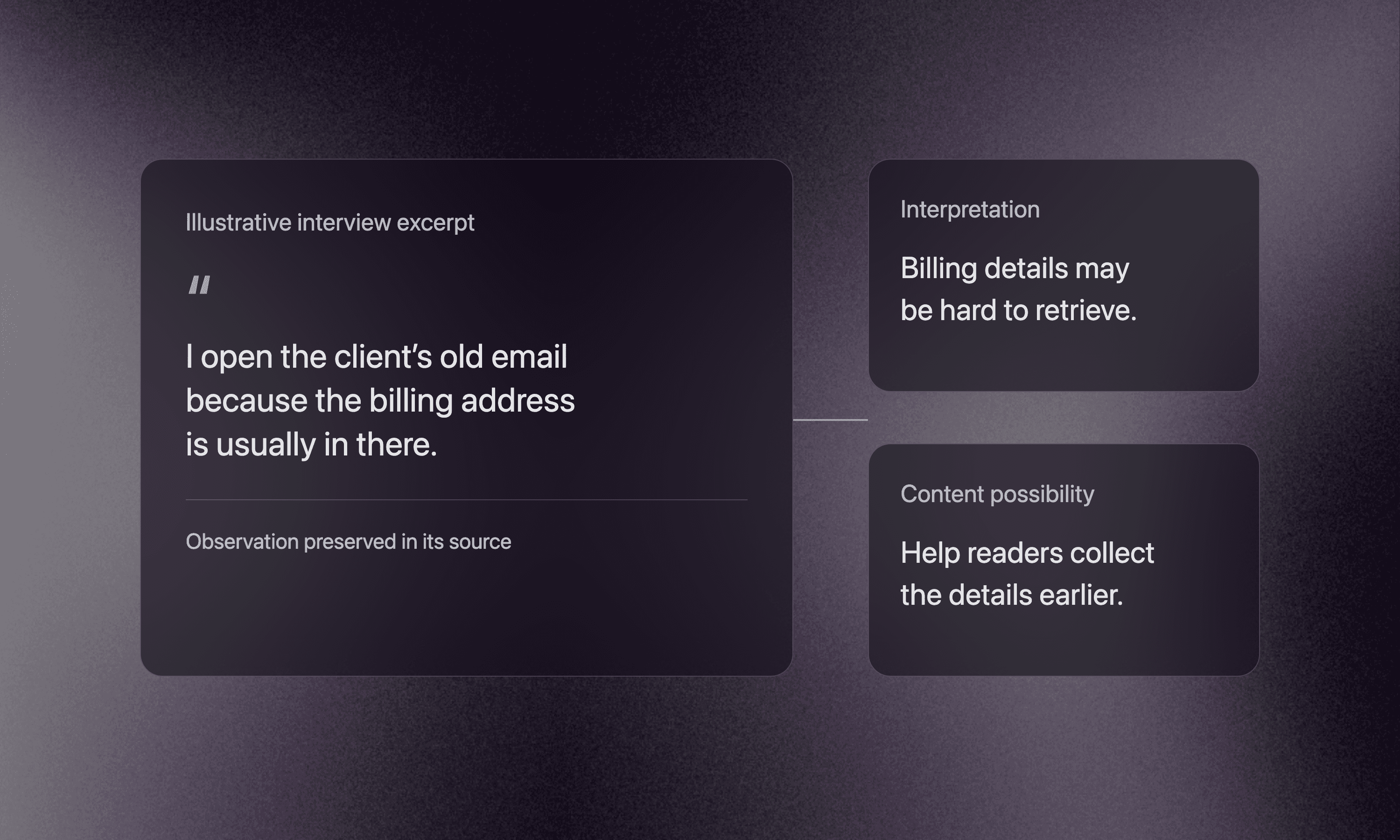
To build this presence, you must move beyond generic advice. Instead of saying "marketing is hard," you share the exact three-step sequence you used to lower your churn by 12%. This specificity builds a founder personal brand on linkedin that people bookmark and return to. We recommend using a professional headshot and a minimalist banner that clearly states your value proposition. These small visual signals tell the reader that you are a serious professional before they even read your first sentence. Consistency in your visual assets is just as important as the consistency of your message.
How do you balance audience building and product work?
Audience building is the practice of consistently creating and sharing value to grow a community of people who care about your mission. For founders, the biggest challenge is finding the time to write while building a product. The answer is not to spend four hours a day on LinkedIn. The answer is to use a systematic workflow that treats content creation like a product sprint. We suggest a "build once, share twice" approach where internal documentation becomes external content.
Successful audience building requires high-leverage formats that generate high dwell time with low production effort. LinkedIn's algorithm prioritizes "dwell time," which is the amount of time a user spends looking at your post. Carousels are the most effective way to capture this, as they force the user to click through multiple slides. According to Socialinsider (2024), carousels generate an average engagement rate of 1.92%, which is significantly higher than single images or text-only posts. By turning your internal SOPs into a 10-slide carousel, you maximize your reach without adding hours to your schedule.
In our experience, the most efficient founders spend 90 minutes per week on content. They don't write from scratch; they curate the most interesting things they learned during the week and format them into visual templates. This turns content from a chore into a byproduct of their actual work.
We believe that your content strategy should be a reflection of your product roadmap. If you are shipping a new feature, share the UI logic behind it. If you hit a scaling milestone, share the database architecture that supported it. This ensures your founder personal brand on linkedin remains grounded in reality. It also ensures that the audience you build is composed of the exact people who would find your product useful. You are not just looking for followers; you are looking for future users and partners.
How can you use authentic storytelling without oversharing?
Authentic storytelling in a professional context is the act of sharing the logic, failures, and pivotal moments of your business journey. It is not about your morning routine or your personal breakfast. It is about the "why" behind your technical decisions. For introverted founders, this is a relief. You don't have to be a "personality"; you just have to be a practitioner who shares their process. This builds trust without compromising your privacy.
To execute authentic storytelling effectively, focus on the "Hard Truths" and "Lessons Learned" frameworks. When you talk about a project that failed, explain the data that led you to the wrong conclusion and what you changed for the next iteration. This vulnerability signals high competence because it shows you have a rigorous process for learning. It makes your founder personal brand on linkedin feel human and relatable, which is essential for building a long-term connection with your audience. People buy from people, but they trust experts who show their work.
A common mistake is thinking that storytelling must be emotional. In the SaaS and startup world, the best stories are often analytical. Share a chart showing a growth spike and then break down the three tactical moves that caused it. This is a story. It has a beginning (the problem), a middle (the tactical execution), and an end (the result). Using Figma-based design templates to visualize these steps makes the story much easier to consume. Visuals bridge the gap between complex data and quick understanding, which is vital on a platform where people scroll quickly.
What are the best startup marketing content pillars?
Startup marketing content pillars are the core themes that define what you talk about and what you want to be known for. Most founders try to talk about everything, which confuses the audience and the algorithm. We recommend choosing three pillars: industry trends, tactical frameworks, and product building. By sticking to these three, you become the "go-to" person for those specific topics. This focus is the fastest way to build a founder personal brand on linkedin that generates leads.
The first pillar, industry trends, involves commenting on shifts in your market. This shows you are aware of the broader environment. The second pillar, tactical frameworks, is where you provide the most value. This is where you share "how-to" guides and step-by-step processes. The third pillar, product building, is your behind-the-scenes look at your company. This balanced startup marketing mix keeps your feed professional yet dynamic. It ensures you aren't just a news curator, but a thought leader with original ideas.
Content Pillar | Goal | Example Format |
|---|---|---|
Industry Trends | Authority | Text post on market shifts |
Tactical Frameworks | Education | 10-slide carousel guide |
Product Building | Trust | UI/UX breakdown or case study |
We have found that the most successful founders spend 60% of their time on tactical frameworks. This is because education is the highest form of marketing. When you teach someone how to solve a problem for free, they naturally look to you when they are ready to pay for a professional solution. This pillar strategy also makes it easier to outsource or automate parts of your content production. Once you know your pillars, you can collect relevant data and examples throughout the week and plug them into your established formats.
How does a strong brand drive inbound recruiting?
Inbound recruiting is the process of attracting high-quality job candidates through your public-facing brand and company culture. When a founder has a strong presence, they don't have to hunt for talent as aggressively. The best engineers and marketers want to work for leaders who have a clear vision and a demonstrated track record of expertise. Your LinkedIn feed acts as a 24/7 recruitment brochure that highlights why your company is a great place to work.
A founder personal brand on linkedin helps you bypass expensive headhunters and generic job boards. By sharing your company's values, your technical challenges, and your team's wins, you create a narrative that candidates want to be part of. According to a LinkedIn report (2023), companies with strong employer brands see a 50% reduction in cost-per-hire and a 28% increase in retention. Inbound recruiting works because it filters for cultural and professional alignment before the first interview even happens. You are hiring people who are already fans of your work.
To leverage your brand for hiring, you should regularly post about your "internal stack." This means sharing how you manage meetings, how you write code, or how you handle customer feedback. This level of transparency is incredibly attractive to top-tier talent. It shows that you have a deliberate culture and that you value excellence. When you finally post a "We are hiring" announcement, it will be seen by a warm audience that already respects your leadership style. This is the ultimate competitive advantage for a startup competing against big tech salaries.
What frameworks convert best for technical founders?
Technical founders often struggle with "marketing speak," which is why using structured frameworks is so effective. Frameworks provide a logical container for your expertise, making it easier to write and easier for the audience to follow. We recommend starting with the Problem-Agitation-Solution (PAS) framework or the Feature-Benefit-Result (FBR) model. These structures allow you to present your ideas with the same rigour you use for your code or product architecture.
The PAS framework is particularly effective for building a founder personal brand on linkedin. You start by identifying a specific technical or business problem your audience faces. Then, you explain the cost of not solving that problem—this is the agitation. Finally, you provide a clear, actionable solution. This approach is persuasive because it is rooted in logic rather than hype. Technical audiences appreciate the lack of fluff and the focus on tangible outcomes. It positions you as a problem-solver rather than a salesperson.
Another powerful tool is the "Teardown." This is where you take an existing system, website, or product and break down what works and what doesn't. Teardowns are highly shareable because they provide immediate value and demonstrate your analytical skills. We suggest using visual annotations on screenshots to make your points clear. When you provide a high-quality teardown, you aren't just giving an opinion; you are providing an education. This reinforces your authority and keeps your audience coming back for more of your specific perspective.
Which metrics should founders track on LinkedIn?
Founders often get distracted by vanity metrics like total followers or likes. While these are indicators of reach, they do not necessarily correlate with business growth. Instead, you should focus on "Quality of Reach" and "Inbound Inquiries." Quality of reach means looking at who is engaging with your content. If your target audience is CTOs, but only junior designers are liking your posts, your content strategy needs adjustment. You can track this through the "Viewers' Job Titles" section in your LinkedIn analytics.
Another critical metric for your founder personal brand on linkedin is profile views. A spike in profile views often indicates that your content is interesting enough that people want to learn more about you and your company. This is the top of your personal sales funnel. You should also monitor the number of direct messages or connection requests from qualified leads or potential hires. These are the "conversions" of the social media world. If you are getting 1,000 likes but zero conversations, your content is too broad and lacks a clear call to value.
LinkedIn analytics can be misleading. We prioritize the 'Interest' tab in our company page analytics and the 'Top Demographics' in personal analytics. These tell us if we are reaching the decision-makers who actually have the budget to buy our product.
We recommend checking these metrics once a month, not every day. Daily checking leads to reactive posting based on what's trending rather than what's strategically sound. A founder's goal is long-term authority, not a viral hit. Consistency in reaching the right 100 people is more valuable than randomly reaching 100,000. Keep a simple spreadsheet to track how many qualified leads come through LinkedIn each month. This will prove the ROI of your time and keep you motivated to continue sharing your expertise.
How do you scale content without a design team?
Scaling content requires removing yourself as the bottleneck for design and formatting. Many founders stop posting because they are perfectionists who hate the way their posts look, but they don't have the time to learn complex design software. The solution is to use a system of templates that ensure your content always looks premium and professional. This allows you to focus 100% on the writing and strategy, while the visual identity handles itself.
Using a system like Figma for your content allows you to create a cohesive brand without being a designer. You can set up your brand colors, typography, and logo once, and then simply swap the text for each new post. This is how you build a founder personal brand on linkedin that looks like it belongs to a Fortune 500 company. Consistent visuals create a "scroll-stop" effect; after a few weeks, your followers will recognize your content before they even see your name. This brand recognition is a shortcut to trust and authority in a busy feed.
We believe that the best templates are minimalist and content-first. They shouldn't distract from your message; they should enhance it. A well-designed carousel can break down a complex technical concept into digestible bites, which is exactly what your busy executive audience needs. By using a repeatable design system, you can move from an idea to a finished, high-quality post in under 15 minutes. This speed is what allows you to maintain a consistent presence while still running your company. Efficiency is the key to longevity in content marketing.
Final thoughts on your founder personal brand on linkedin
Building a founder personal brand on linkedin is a marathon, not a sprint. It is a commitment to being the most helpful person in your niche. By focusing on frameworks, data, and authentic storytelling, you can build a massive asset for your company without sacrificing your privacy or your product roadmap. The most important step is to start sharing what you already know. Your daily work is the most valuable content you have.
Remember that your goal is to build executive presence and drive audience building through consistent value. Whether you are using your brand for startup marketing or inbound recruiting, the principles remain the same: be clear, be helpful, and be visual. As you continue to ship your product, continue to ship your ideas. The market rewards founders who are willing to lead in public. We have seen that the compounded return on a personal brand often exceeds the return on any other marketing channel you could invest in.
Start by identifying your three core pillars and creating your first tactical carousel. Don't wait for the perfect time or the perfect idea. The best insights come from the feedback loop of actually posting and interacting with your peers. As your audience grows, you will find that doors open more easily, sales cycles get shorter, and the best talent starts coming to you. That is the power of a well-executed personal brand. It is the bridge between your hard work and the recognition it deserves.