7 Steps to Building a Content Marketing Funnel specifically for SaaS Success
Discover how to construct a robust content marketing funnel for SaaS. Explore ToFu, MoFu, and BoFu strategies to drive acquisition and retention instantly.
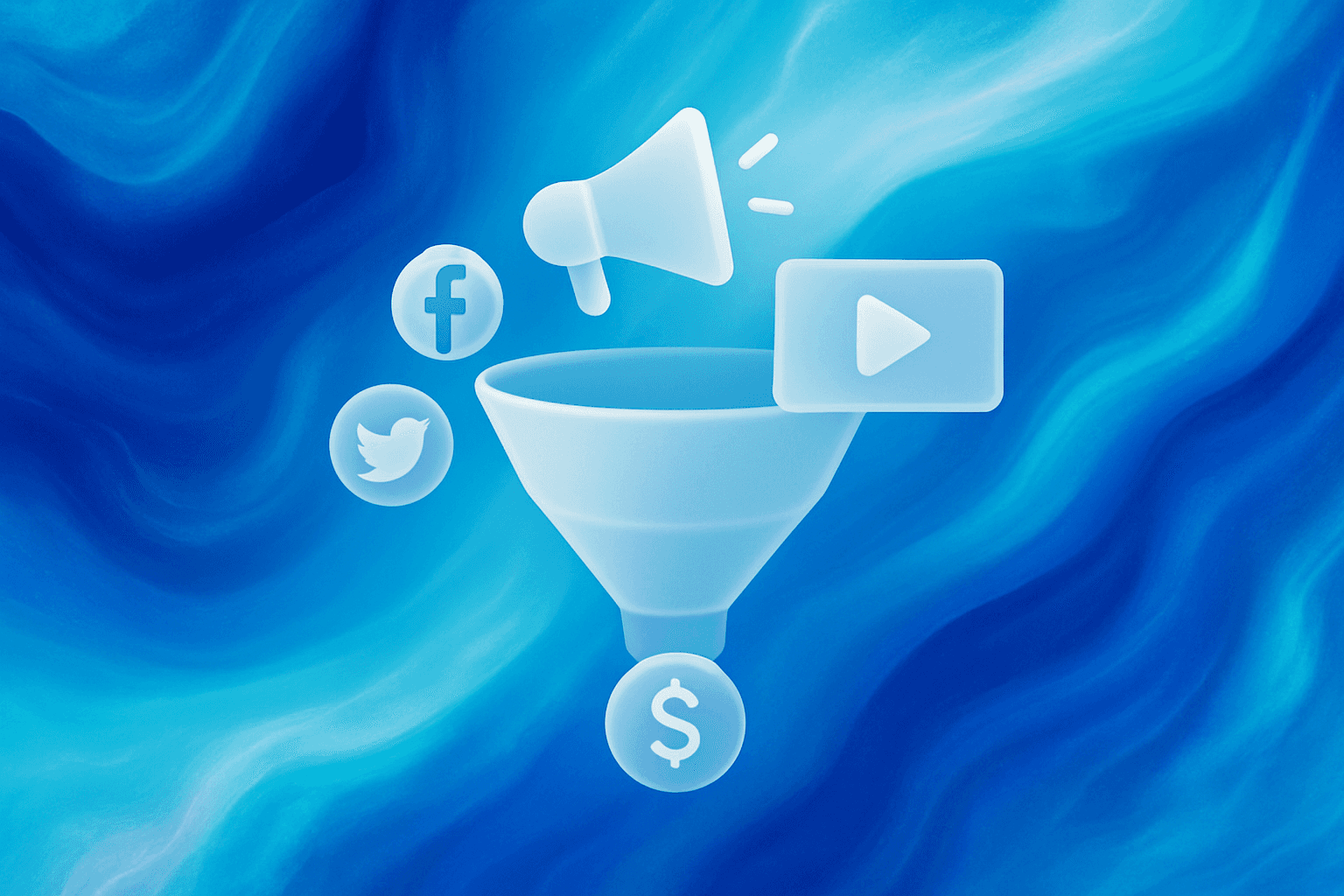
In the competitive landscape of 2026, software companies cannot rely on luck to find customers. You need a deliberate strategy to guide strangers toward becoming loyal users. This strategy is known as a content marketing funnel for SaaS. Unlike generic marketing, this approach addresses the specific needs of subscription-based businesses; where the relationship does not end at the purchase but begins there.
This guide will walk you through building a funnel that attracts, converts, and keeps customers. We will explore the nuances of ToFu, MoFu, and BoFu, and how to optimize each stage for maximum growth.
The Importance of a Structured Conversion Journey
A content marketing funnel for SaaS is not just a collection of blog posts. It is a system. It maps content to the specific questions a user asks at different stages of their buying journey. Without this structure, you might attract traffic that never converts or generate leads that are not ready to buy.
When you align your content with user intent, you build trust. Trust is the currency of the SaaS world. Users need to know that your software is reliable, secure, and capable of solving their problems before they commit to a monthly or annual subscription.
Defining the Content Marketing Funnel for SaaS
To build an effective funnel, you must understand its architecture. The funnel is generally divided into three main sections, plus a critical fourth stage for SaaS companies.
Top of Funnel (ToFu): Awareness. The user has a problem but does not know you exist.
Middle of Funnel (MoFu): Consideration. The user knows their problem and is evaluating solutions.
Bottom of Funnel (BoFu): Decision. The user is ready to buy and needs a final push.
Retention: Advocacy. The user is a customer; you must keep them happy to prevent churn.
How SaaS Differs from Traditional Ecommerce
In traditional ecommerce, the goal is a single transaction. In SaaS, the goal is Recurring Revenue (ARR). A content marketing funnel for SaaS must prioritize long-term education over quick sales tactics. If a customer buys your software but does not understand how to use it, they will cancel. Therefore, your content must educate as much as it persuades.
The Role of EEAT in Customer Acquisition
Google places high value on Experience, Expertise, Authoritativeness, and Trustworthiness (EEAT). For a SaaS company, this means your content must be written by experts. You cannot simply guess what your users need; you must demonstrate that you understand their industry deeply. High-quality content signals to search engines and users that your software is a serious solution.
Phase 1: Top of Funnel (ToFu) – Generating Awareness
The widest part of your funnel is the Top of Funnel (ToFu). Here, your goal is to cast a net to catch potential users who are experiencing symptoms of a problem your software solves.
Solving High-Level Pain Points
At this stage, users are not searching for your brand name. They are searching for answers. For example, if you sell project management software, a user might search "how to organize remote teams." Your content should answer this question thoroughly without aggressively pushing your product.
Effective ToFu content includes:
"How-to" guides
Industry trend reports
Educational checklists
Thought leadership articles
The objective is to be helpful. When you help a user solve a small problem for free, they are more likely to trust you with a larger problem later.
Visual Storytelling and Social Media
In 2026, attention spans are short. Text-heavy blog posts are necessary for SEO, but social media is where discovery happens. Platforms like LinkedIn, X (formerly Twitter), and Instagram are vital for distributing your ToFu content.
However, simply posting a link is rarely effective. You need to repurpose your insights into carousel posts, infographics, and short videos. Visuals stop the scroll and communicate value instantly.
Leveraging a Design System
Creating high-quality visuals consistently can be a bottleneck for many marketing teams. Consistency is key to brand recognition. To maintain a professional look without hiring a large design team, many SaaS companies use templates.
A high-quality Social Media Kit can streamline this process. By using pre-made, editable designs, your marketing team can turn a blog post into a carousel in minutes. This ensures that your content marketing funnel for SaaS remains active across all channels without draining your resources.
Phase 2: Middle of Funnel (MoFu) – Lead Nurturing
Once a user visits your site and reads your ToFu content, they move to the Middle of Funnel (MoFu). They know they have a problem, and they know you might have the solution. Now, you need to capture their contact information to nurture the relationship.
Gated Content and Lead Magnets
MoFu content is usually "gated," meaning a user must provide an email address to access it. This exchange is fair because the value of the content is higher than a standard blog post.
Examples of high-converting lead magnets include:
eBooks: Deep dives into specific industry topics.
Whitepapers: Data-backed research and original studies.
Templates: Spreadsheets or design files that save the user time.
Webinars: Live or recorded sessions demonstrating expertise.
Email Drip Campaigns for Engagement
Once you have the lead, you must nurture them. An email drip campaign is a series of automated emails that guide the user toward a purchase.
Welcome Email: Deliver the lead magnet and introduce your brand.
Value Email: Share additional tips related to their interest.
Soft Pitch: Mention how your software helps with the topic they are learning about.
Social Proof: Share case studies or testimonials.
This process keeps your brand top-of-mind while the user evaluates their options.
Phase 3: Bottom of Funnel (BoFu) – Driving Conversions
The Bottom of Funnel (BoFu) is where the transaction happens. These users have high intent. They are comparing you against competitors and checking your pricing. Your content marketing funnel for SaaS must provide clarity and remove friction here.
Product Demos and Free Trials
The most common BoFu content is the product itself. Free trials and freemium models allow users to test the software. However, you need content to support this.
Demo Videos: A 2-minute walkthrough of your core features.
Live Demos: A sales call where a representative walks the prospect through the tool.
Implementation Guides: Documentation that shows how easy it is to get started.
Competitor Comparison Pages
Users will compare you to others. It is better to control this narrative than to let them guess. Create comparison pages targeting keywords like "[Your Brand] vs [Competitor Brand]."
Be honest in these comparisons. Highlight where you win, but also acknowledge where you might not be the best fit. This transparency builds immense trust and ensures you acquire customers who are actually a good match for your product.
Phase 4: Retention Content – The Growth Engine
In SaaS, the funnel is actually an hourglass. After the purchase, the funnel expands again into retention and advocacy. Keeping a customer is far cheaper than acquiring a new one.
Onboarding and Feature Updates
Churn occurs when users do not see value. Often, the value is there, but the user does not know how to access it. Your content strategy must include:
Knowledge Base Articles: Step-by-step tutorials for every feature.
Academy Courses: Certification programs for mastering your tool.
Feature Update Blogs: Announcements of new capabilities to show the product is evolving.
Building a Community Around Your Brand
Community is the ultimate retention tool. When users connect with each other, they are less likely to leave. Create content that fosters this connection, such as user spotlights, community forums, and user conferences.
When you invest in retention content, you turn customers into advocates who then feed new leads into the top of your content marketing funnel for SaaS.
Measuring the Success of Your Funnel
You cannot improve what you do not measure. To ensure your funnel is working, track these key metrics:
Traffic: Are people finding your ToFu content?
Conversion Rate: What percentage of visitors become leads (MoFu)?
CAC (Customer Acquisition Cost): How much do you spend on content to get one paying user?
LTV (Lifetime Value): How much revenue does the average customer generate?
Churn Rate: What percentage of customers cancel each month?
A healthy content marketing funnel for SaaS will show a steady increase in traffic and a gradual decrease in CAC over time as your organic content gains authority.
Frequently Asked Questions
1. How long does it take to see results from a SaaS content funnel? Building a content funnel is a long-term investment. Typically, it takes 6 to 9 months to see significant organic traffic and lead generation. However, you can accelerate this by promoting your content via social media and paid ads. Consistency is the most critical factor; stopping early will reset your progress.
2. What is the difference between B2B and B2C SaaS content? B2B SaaS content tends to be more formal, data-driven, and focused on ROI (Return on Investment). The sales cycle is longer, involving multiple decision-makers. B2C SaaS content is often more emotional, focuses on personal productivity or entertainment, and aims for a faster, impulse-driven conversion.
3. How often should I publish new content? Quality beats quantity, but frequency matters for SEO. A good target for a growing SaaS company is 2 to 4 high-quality blog posts per month. Additionally, you should be active on social media daily. Using tools like a Social Media Kit can help you maintain high social volume without compromising quality.
4. Should I gate all my MoFu content? Not necessarily. While gating content generates leads, ungated content gets more views and builds trust faster. A modern strategy is "pillar content," where you offer a massive, high-value guide for free (ungated) but offer a downloadable PDF version or a related template in exchange for an email.
5. How do I choose the right keywords for my funnel? Start with user intent. For ToFu, look for informational keywords ("how to," "what is," "best practices"). For MoFu, look for comparison keywords ("best tools for," "software templates"). For BoFu, target transactional keywords ("buy," "pricing," "review," "vs"). Tools like Ahrefs or SEMrush are essential for this research.
6. Can I use AI to write my SaaS content? AI is a powerful tool for outlining and brainstorming, but it should not write your final draft. SaaS buyers are sophisticated; they can spot generic AI content. To adhere to EEAT standards, your content needs human insight, real-world examples, and a unique brand voice that AI cannot fully replicate.
Conclusion
Building a successful content marketing funnel for SaaS is not about tricking people into buying software. It is about creating a helpful, educational ecosystem that guides users from their first moment of frustration to a solution that makes their lives easier.
By structuring your efforts into ToFu, MoFu, and BoFu stages, and placing a heavy emphasis on retention, you create a sustainable growth engine. Remember to leverage efficient tools like our Social Media Kit to keep your visual strategy sharp and consistent. Start building your funnel today, and you will secure the recurring revenue of tomorrow.