The 10 Best Canva Alternatives for B2B SaaS in 2026
Discover the top canva alternatives for b2b saas to scale your visual identity. Compare Figma, Adobe Express, and more for professional marketing workflows.
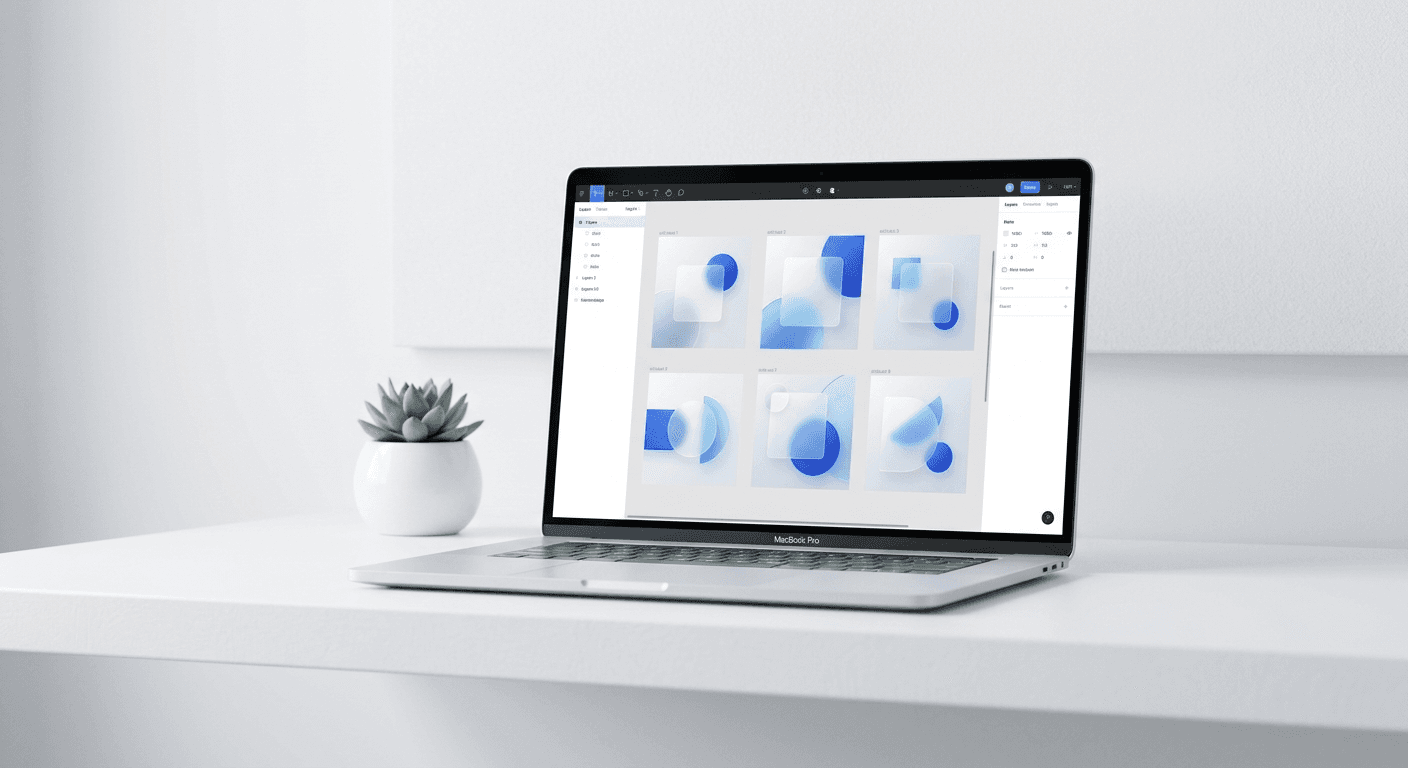
The best canva alternatives for b2b saas are professional-grade tools like Figma and Adobe Express that prioritize design systems over individual graphics. For companies scaling in 2026, the shift from drag-and-drop editors to component-based systems is the key to maintaining brand consistency and high-velocity output.
Choosing the right canva alternatives for b2b saas in 2026 requires a shift in perspective. You are no longer just looking for a tool that makes pretty pictures. You need a system that ensures every social media post, sales deck, and LinkedIn carousel looks like it was built by a premium design agency. Canva is excellent for hobbyists, but SaaS teams require more control, better typography, and scalable components.
We see founders and marketers struggle with the limitations of generic design tools every day. The frustration usually stems from brand drift, where different team members produce content that feels disjointed. By moving to professional saas design tools, you fix the source of the problem rather than just the symptoms of poor design.
Why is Canva often the wrong choice for scaling B2B SaaS teams?
The answer is simple: Canva lacks the structural integrity of professional design systems. While it offers a low barrier to entry, it often leads to amateur-looking content because the templates are overused by millions of other businesses. For a B2B startup, looking like everyone else is a direct threat to your brand authority and market positioning.
In our experience, the most successful SaaS companies treat their marketing assets with the same technical rigor as their product UI. This means using grids, consistent spacing, and component libraries that Canva cannot effectively manage at scale. When you rely on a tool built for the mass market, you sacrifice the unique visual identity that separates an established enterprise from a weekend project.
Marketing teams at high-growth startups find that they spend more time fixing alignment issues in Canva than they would if they used a system with proper layout constraints. B2B visual content creation requires a level of precision that drag-and-drop editors simply do not provide. According to a report by Lucidpress, consistent brand presentation can increase revenue by up to 33%. This consistency is significantly harder to maintain when using a platform that lacks global style tokens and nested components. For a B2B SaaS company, every piece of content is a touchpoint that either builds or erodes trust with a potential buyer. Professional-grade tools ensure that every pixel aligns with your brand guidelines, preventing the subtle visual inconsistencies that signal a lack of maturity to sophisticated buyers. This level of brand control is why many enterprise teams are moving away from generic editors toward more specialized solutions.
Is Figma the best canva alternative for business growth?
Figma is the industry standard for UI/UX design, but it has quickly become the superior choice for B2B marketing teams. Unlike Canva, Figma is built on a foundation of professional design principles. Features like Auto Layout allow you to create templates that grow and shrink based on the text content, ensuring your designs never break when you swap out headlines.
The transition from canva vs figma for marketing is often driven by the need for speed. While Figma has a steeper learning curve, the long-term efficiency is unmatched. You can build a single design system and apply it to hundreds of social media posts instantly. This approach allows you to ship professional content without needing a full-time graphic designer on every small task.
We find that the real power of Figma lies in its collaborative nature and its ability to act as a single source of truth for your brand. Data from Figma's internal research suggests that teams using design systems complete tasks 34% faster than those working from scratch. For a B2B SaaS company, this speed translates directly into more leads and faster market feedback. By building your marketing assets in Figma, you align your social media presence with your product interface, creating a cohesive user experience across every channel. This integration is essential for building a premium brand that feels established and reliable. Figma also supports advanced prototyping and handoff features that allow marketing teams to collaborate directly with product designers, ensuring that brand assets are always up to date. Using a tool like Figma-based carousel templates simplifies this even further, giving you the power of professional design without the time-consuming setup usually required for new files.
What are the top 10 canva alternatives for b2b saas in 2026?
The market for design software has matured significantly. There are now specific tools designed for different stages of the SaaS lifecycle. We have evaluated these based on their ability to handle enterprise-level branding, collaboration features, and output quality.
Tool Name | Best For | Key B2B Advantage |
|---|---|---|
Figma | Scalable Marketing Systems | Auto Layout and Component Libraries |
Adobe Express | Social Media Quick Wins | Direct access to Adobe Stock and Fonts |
Penpot | Open-Source Teams | SVG-based collaboration with no vendor lock-in |
Framer | High-End Pitch Decks | Advanced animations and web-ready layouts |
Kittl | Graphic Asset Creation | Powerful vector editing for non-designers |
Creatopy | Ad Campaign Automation | Bulk editing for multi-size display ads |
Snappa | Solopreneurs | Fastest simple image creator for blogs |
VistaCreate | Budget-Conscious Teams | Large library of royalty-free B2B assets |
Visme | Data Visualization | Interactive charts and infographic templates |
Adobe Illustrator | Brand Identity Experts | Industry-standard vector precision |
Each of these tools serves a specific purpose within a marketing department. For SaaS founders, the goal is to choose a tool that minimizes the friction between an idea and a finished post. If you are constantly waiting on a designer to change a word on a graphic, you are losing speed and money.
While many lists of canva alternatives for b2b saas focus on simple drag-and-drop features, we prioritize tools that support enterprise design software requirements. This includes version control, permissions management, and asset sharing. For example, Creatopy allows teams to manage brand kits across multiple departments, ensuring that the sales team in Europe uses the same assets as the marketing team in the US. A study by Socialinsider indicates that professional, high-quality visuals on LinkedIn generate 2x more engagement than low-quality or generic imagery. This data highlights why B2B companies cannot afford to use amateur tools. When your content looks premium, your brand perceived value increases, allowing you to command higher prices and attract better talent. The tools listed above provide the technical foundation needed to achieve this level of professional polish at every stage of your company's growth.
How do you implement b2b visual content creation at scale?
Scaling content creation is not about hiring more people. It is about building better systems. In the context of a B2B SaaS, this means moving away from one-off graphics and toward a modular approach. You should be able to assemble a post from pre-approved blocks rather than designing from a blank canvas every time.
We recommend starting with a core set of 5-10 templates for your most common content types: feature updates, customer testimonials, industry insights, and team milestones. By standardizing these formats, you reduce the cognitive load on your marketing team. They no longer have to worry about where the logo goes or what font size to use; they simply plug in the content and hit export.
Implementation begins with choosing a platform that supports reusable components. Figma is the clear leader here because it allows for atomic design principles to be applied to social media. According to Content Marketing Institute, 72% of the most successful B2B marketers use design tools to simplify their content production process. This suggests that the top-performing companies are those that invest in professional-grade systems rather than manual labor. When you build a library of components, you create an environment where high-quality output is the default, not the exception. This system allows you to maintain a high volume of content without sacrificing the premium aesthetic that your brand requires. It also makes onboarding new team members much faster, as they can start producing brand-aligned content on day one by using the established template system. This systematic approach is what separates a chaotic marketing department from a high-efficiency growth engine.
Why should SaaS founders use enterprise design software for social media?
SaaS founders often make the mistake of thinking social media design is a "junior" task that doesn't require professional tools. This is a costly error. Your social media presence is often the first interaction a potential enterprise client has with your brand. If your LinkedIn posts look amateur, they will assume your product is amateur too.
Using enterprise design software like Figma or Adobe Express signals to the market that you take your brand seriously. These tools allow for precise control over typography, spacing, and color—elements that are critical for creating a premium feel. When you use professional tools, you also make it easier to hire high-level design talent later, as they will already be familiar with your workflow.
Professional tools provide the security and scalability that growing SaaS companies need. For instance, being able to lock down certain brand elements so they cannot be changed by non-designers is a feature Canva lacks but professional tools excel at. The Forrester Total Economic Impact report on enterprise design tools shows that companies can see a significant return on investment through improved efficiency and brand consistency. By providing your team with the right tools, you empower them to do their best work without the technical frustrations of a limited platform. This investment pays off in the form of a stronger brand identity and a more professional market presence. Founders who prioritize these systems early on find that they can scale their marketing efforts much faster than those who stick with consumer-grade software. It is not just about the visuals; it is about the internal workflow and the message it sends to the outside world about your company's standards.
How does canva vs figma for marketing impact design speed?
The debate between canva vs figma for marketing usually comes down to short-term speed versus long-term velocity. Canva is faster for the first five minutes of a project because you can grab a template and go. However, as the project grows or needs to be replicated, Figma becomes significantly faster.
In Figma, you can use bulk editing features and plugins to automate repetitive tasks. If you need to change the brand color on fifty different carousel slides, you change one color variable and the entire set updates instantly. In Canva, you would likely have to click through every slide manually. This is why Figma is the superior choice for any team planning to produce content at a high volume.
Speed in design is often misunderstood as the time it takes to draw a shape, but in B2B marketing, speed is actually about the time it takes to go from a content brief to a published post. Data shows that Nielsen Norman Group research supports the idea that design systems significantly reduce the time spent on repetitive UI and marketing tasks. For a SaaS marketing team, this means that while the initial setup in Figma might take longer, the daily output speed increases exponentially over time. You are effectively building a factory for your content rather than hand-crafting every piece. This industrial approach to design is necessary for maintaining a presence on platforms like LinkedIn, where consistency and frequency are rewarded by the algorithm. By using Figma's advanced features, you can turn a task that used to take hours into one that takes minutes, allowing your team to focus on high-level strategy and growth rather than pixel-pushing. This shift in efficiency is the primary reason B2B companies are making the switch.
What are the best canva alternative for business presentations?
Presentations are a core part of the B2B SaaS sales process. While Canva has decent presentation features, tools like Framer and Pitch provide a much higher level of polish and interactivity. These tools allow you to create presentations that feel like live websites, which is a powerful way to impress potential enterprise clients.
Framer, in particular, is an excellent canva alternative for business because it allows you to build responsive layouts that look great on any screen. If you are presenting a high-six-figure SaaS deal, you don't want a slide deck that looks like a high school project. You want something that reflects the technical sophistication of your software.
High-stakes B2B sales require a level of visual storytelling that generic slide tools often fail to deliver. According to research from VWO, people remember 65% of information when it is paired with a relevant visual, compared to only 10% for text alone. This makes the quality of your sales decks a critical factor in your conversion rates. Tools like Pitch and Framer offer advanced collaboration features that allow your sales and marketing teams to work together on the same deck without versioning issues. This ensure that the most up-to-date product screenshots and messaging are always being used in the field. For a SaaS company, where the product is constantly evolving, this synchronization is vital. By moving away from Canva and toward more specialized presentation software, you provide your sales team with the tools they need to stand out in a crowded market. The professional finish of these tools helps to build the credibility necessary to close enterprise-level contracts and establish long-term partnerships.
Can saas design tools replace a full-time designer?
The short answer is no, but they can significantly delay the need for one. Professional saas design tools with the right template systems allow founders and marketers to produce high-quality work that satisfies 80-90% of their needs. This frees up budget to hire a designer for the high-impact tasks like product UI or major brand overhauls.
We see many startups successfully scaling to their first $1M in ARR by using a combination of Figma and professional templates. This allows them to maintain a premium look while keeping their burn rate low. The key is to use tools that don't lock you into a "non-professional" ecosystem, making the eventual handoff to a creative director much smoother.
The goal of using professional design software is not to turn every marketer into a designer, but to give them a framework where it is difficult to make a bad design. This concept, often called "guardrails," is essential for maintaining brand integrity without a designer overseeing every small graphic. Research by McKinsey & Company indicates that companies with high design scores outperform the market by as much as two to one. This doesn't mean you need a massive design team; it means you need to prioritize design quality from the start. By providing your marketing team with a professional Figma setup, you give them the tools to produce work that meets this high standard. This approach allows you to scale your content engine without the overhead of a large creative department, while still maintaining the premium brand identity that B2B buyers expect. It is a strategic way to manage resources while ensuring that your visual output remains a competitive advantage rather than a liability.
How do you choose the right enterprise design software?
Choosing between canva alternatives for b2b saas comes down to three factors: team size, technical skill, and brand requirements. If you have a team of one and need to ship basic social graphics, Adobe Express might be enough. If you are building a scalable marketing engine, Figma is the only logical choice.
Evaluate your needs based on the long term. It is much harder to migrate your assets from a simple tool to a professional one later than it is to start with the right foundation. Look for software that offers a robust API, integrates with your existing tech stack, and supports the level of brand control your company requires as it grows.
When selecting your design stack, consider the future complexity of your marketing efforts. An enterprise design system should grow with your company, allowing for more advanced workflows as your team expands. According to Gartner, marketing technology now accounts for 25% of total marketing budgets. This investment must be made in tools that provide lasting value rather than temporary fixes. Figma's extensive plugin ecosystem and developer-friendly features make it the most future-proof choice for any SaaS company. It allows you to automate workflows that would be impossible in other tools, such as syncing design tokens directly to your code or using AI to generate variations of your marketing assets. By choosing a tool with this level of depth, you ensure that your design process never becomes a bottleneck for your growth. The right software serves as a catalyst for your marketing team, enabling them to produce more, test faster, and maintain a higher standard of visual excellence across every customer touchpoint.
How do you transition your team away from Canva?
The transition to canva alternatives for b2b saas should be handled as a process, not an event. Start by identifying the most critical brand assets that need a professional upgrade. Typically, these are your LinkedIn carousels and sales decks. Move these into a tool like Figma first, using professional templates to bridge the skill gap.
Train your team on the basics of the new tool, focusing on how to edit text and export files. You don't need them to become Figma experts; you just need them to be able to use the system you have built. Once they see how much better the final output looks, they will be motivated to leave the limitations of Canva behind.
A successful transition relies on providing your team with the right resources from day one. Instead of asking them to design from scratch in a new environment, give them a library of pre-built components that they can easily manipulate. This reduces the initial friction and ensures that the quality of your marketing remains high during the move. Data from Social Media Examiner suggests that 82% of marketers prioritize visual content in their strategy. This high priority means that any downtime or quality drop during a software transition can have a direct impact on your engagement and lead generation. By using a structured approach and professional-grade templates, you minimize this risk and set your team up for long-term success. The shift to more advanced tools is a critical step in the maturity of any B2B SaaS marketing department, and the benefits of improved brand authority and workflow efficiency far outweigh the temporary challenges of learning a new system. By the end of 2026, the companies that have mastered these professional design workflows will be the ones that dominate the visual landscape of the B2B world.
The search for canva alternatives for b2b saas ends when you prioritize brand longevity and design efficiency. Whether you choose Figma for its component power or Adobe Express for its deep stock library, the goal remains the same: stop looking like an amateur and start looking like a category leader. We invite you to explore how professional Figma templates can transform your social media presence from a chore into a competitive advantage.