5 Best Mood Board Templates Brand Identity Founders Need in 2026
Discover the best mood board templates brand identity experts use to build SaaS brands. Fast-track your visual strategy with top Figma moodboard templates.
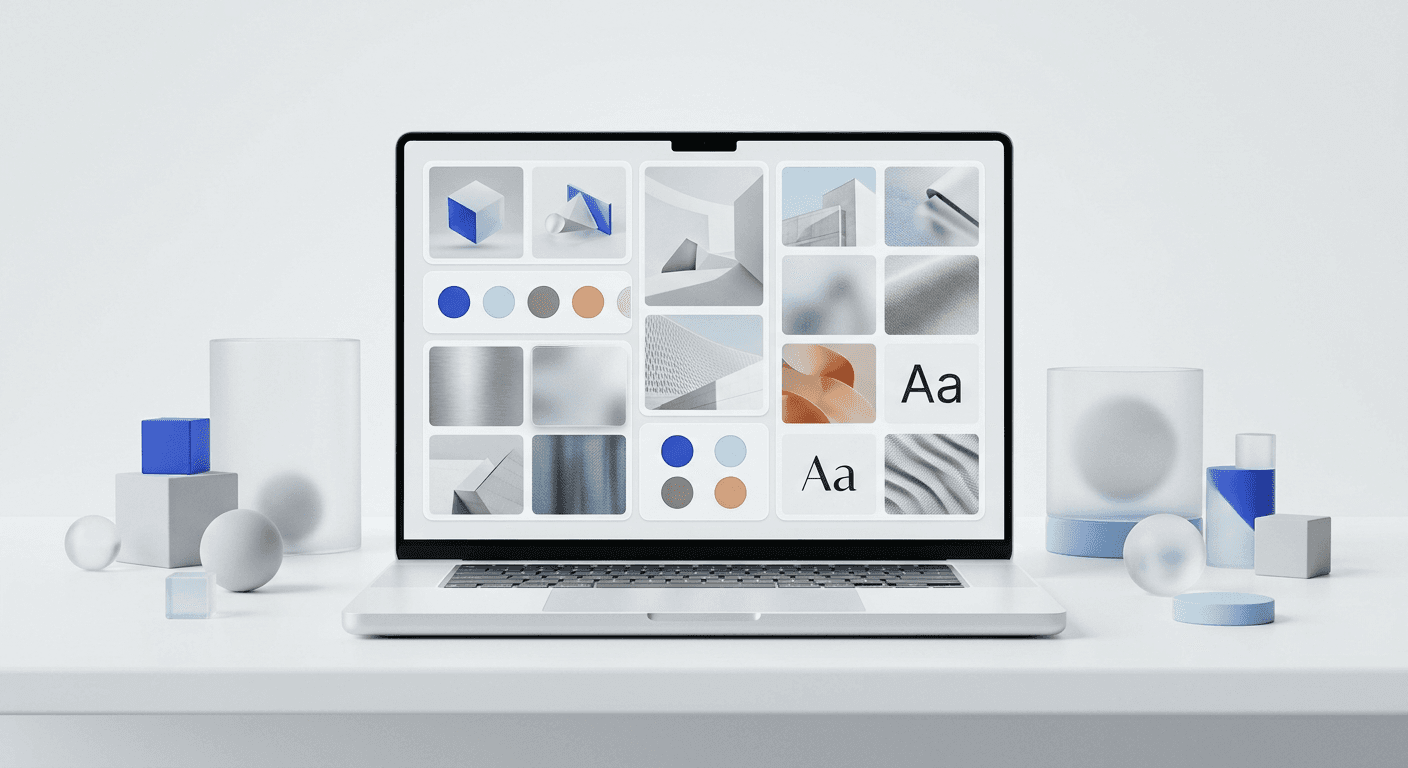
The best mood board templates brand identity help you define a visual direction without the cost of a full design agency. These structured layouts align your team on typography, color palettes, and UI patterns before you commit to final assets.
What is a brand identity mood board?
A brand identity mood board is a curated arrangement of images, textures, typography, and color samples that defines the visual direction of a project. It is the visual foundation that prevents expensive design revisions by ensuring all stakeholders agree on the aesthetic before production starts. In our experience, using a mood board reduces the time spent on design feedback loops by providing a clear reference point for every visual decision you make.
Mood boards translate abstract brand values into concrete visual elements. If your brand is "reliable," the mood board might show serif fonts and deep blue tones. If it is "disruptive," you might see high-contrast neon accents and brutalist layouts. According to Adobe, a successful mood board communicates the "feel" of a brand long before the first logo draft exists. This stage is critical because it allows you to test concepts quickly without the high cost of high-fidelity prototyping. When you use visual brand strategy templates, you stop guessing and start building with intent.
We build our internal projects on the belief that design should be systematic. A mood board is not just a collection of pretty pictures. It is a strategic tool that maps out how your brand will look across different touchpoints, from your SaaS landing page to your LinkedIn carousels. By organizing these elements in a single Figma file, you create a source of truth that your marketing and product teams can reference at any time. This consistency is what separates professional startups from amateur side projects.
How do you find the best mood board templates brand identity for your startup?
The best mood board templates brand identity are those that offer high flexibility while maintaining a clean, structured hierarchy. You need a template that lets you swap out images and adjust color tokens in seconds, not minutes. Most founders start with Pinterest, but Pinterest boards are often too messy for professional workflows. You need top figma moodboard templates that allow for precise layout control and easy handoff to developers or designers.
Search for templates that prioritize clarity over decoration. A professional template includes dedicated sections for primary and secondary color palettes, type scales, and UI component examples. In our experience, templates that use Figma Auto Layout are superior because they automatically adjust as you add more inspiration images. This keeps your board organized even when you are in the middle of a messy brainstorming session. Using free mood board layouts 2026 can be a good starting point, but premium options often provide the refined structure needed for a complex saas brand identity design.
Research from Nielsen Norman Group suggests that visual consistency improves user trust and brand recognition. This consistency starts at the mood board phase. When evaluating a template, check if it allows you to compare different visual directions side-by-side. The goal is to see how your brand looks in different "moods" before picking a winner. High-quality inspiration boards for startups often feature multi-page setups for this exact purpose. You should be able to move from a minimalist direction to a bold one with a single click.
Which are the 5 best mood board templates brand identity for SaaS?
The following five templates represent the highest standard for modern brand building. We have selected these based on their ease of use in Figma, their focus on saas brand identity design, and their ability to help founders move fast. Whether you are building a B2B platform or a creator-led tool, these layouts provide the structure you need to succeed.
Template Name | Best For | Key Feature |
|---|---|---|
The Minimalist SaaS Pro | Clean, enterprise B2B apps | Typography-first hierarchy |
The Dark Mode Disruptor | AI and Dev-tool startups | High-contrast color tokens |
The Creator Canvas | Personal brands and agencies | Lifestyle and social grid focus |
The Design System Foundation | Scale-ups and product teams | Pre-built UI component slots |
The Organic Growth Board | Eco-tech and wellness SaaS | Soft palettes and rounded UI |
1. The Minimalist SaaS Pro
This layout focuses on white space and crisp typography. It is perfect for companies that want to look established and premium. It features specific modules for San-Serif pairings and monochromatic color schemes. We recommend this for founders who want a look similar to Stripe or Linear.
2. The Dark Mode Disruptor
Modern tech brands are moving toward dark, high-contrast interfaces. This template includes pre-set frames for neon accents and glowing UI elements. It helps you visualize how your brand will stand out on dark backgrounds, which is a common requirement for AI-driven platforms today.
3. The Creator Canvas
If your marketing strategy relies on LinkedIn and Instagram, you need this template. It includes a section for "visual rhythm," showing how your brand colors look across a 9-tile social grid. It helps you maintain a cohesive personal brand without over-designing every individual post.
4. The Design System Foundation
This is more than a mood board; it is the first step toward a design system. It includes placeholders for buttons, input fields, and icons. Use this if you are a product-led founder who wants to ensure your brand identity works in a functional UI environment. It is one of the most effective visual brand strategy templates for long-term scaling.
5. The Organic Growth Board
Not every startup needs to be cold and clinical. This template uses soft gradients and rounded corners. It is the best choice for consumer-facing apps or wellness startups that need to build an emotional connection with their users through visual warmth and accessibility.
Why should startups use visual brand strategy templates?
Startups must move fast, and building a brand from scratch is a significant bottleneck. Visual brand strategy templates provide a shortcut to a professional look without the six-figure price tag of a branding agency. By using a pre-structured Figma file, you can test dozens of visual directions in a single afternoon. This speed allows you to get your product to market faster while maintaining a high level of credibility with investors and early adopters.
In our experience, founders who skip the visual strategy phase often end up with "design debt." This is the cost of having to rebrand six months later because your initial visuals were inconsistent or amateur. A mood board acts as a guardrail. It ensures that every new landing page, ad creative, and social post feels like it belongs to the same company. According to Statista, consistent brand presentation across all platforms can increase revenue by up to 23%. This is a massive return for a process that takes only a few hours when you have the right template.
Using top figma moodboard templates also makes hiring easier. When you eventually hire a freelance designer or a marketing lead, you can hand them your mood board. This gives them an immediate understanding of your brand's DNA. They do not have to guess what you like; they can see it. This clarity reduces onboarding time and ensures that the work they produce is on-brand from day one. It turns your visual identity into a scalable asset rather than a subjective preference inside the founder's head.
How do you transition from an inspiration board to a design system?
The transition from a mood board to a design system is where many founders struggle. A mood board is about vibes; a design system is about rules. To bridge this gap, you must extract the repeatable elements from your inspiration. Start by defining your primary and secondary color tokens. Then, select two fonts that complement each other and define your heading hierarchy. Finally, determine your spacing and corner radius rules based on the UI examples in your mood board.
Once your core brand elements are set, you can start building your marketing assets. We find that moving to a template-based system for social media is the fastest way to maintain brand consistency. For example, we use customizable Figma templates to ensure that every carousel we post follows our brand guidelines automatically. This approach allows us to focus on the content and strategy rather than wrestling with pixels every day. When your mood board informs your templates, your brand identity becomes a self-sustaining engine.
Design consistency is the bridge between a startup and a trusted brand. Using a mood board ensures that bridge is built on a solid foundation of intentional visual choices.
What are the common mistakes in saas brand identity design?
The most common mistake is following trends without considering long-term brand equity. Many inspiration boards for startups are filled with whatever is popular on Dribbble this week. While looking modern is important, your brand must also be functional and accessible. A mood board that is too focused on aesthetic trends may fail to communicate your core product value. You must balance current styles with timeless design principles like legibility and contrast.
Another pitfall is overcrowding the mood board. If you include 50 different images with 10 different styles, you do not have a mood; you have a mess. A successful mood board is about curation. You should aim for 5-10 high-impact images that clearly define your direction. If an image does not contribute to the overall feel of the brand, remove it. Clarity is more valuable than quantity when you are trying to align a team. Use free mood board layouts 2026 as a structure, but be ruthless in what you choose to display within them.
Finally, many founders forget to test their mood board against their target audience. Your brand identity should not just appeal to you; it must resonate with your customers. If you are building a tool for developers, your brand should feel technical and efficient. If you are building for HR managers, it should feel approachable and human. Always ask yourself if the visual direction on your board matches the expectations of the person who will actually pay for your software. Design is a communication tool, not just an artistic expression.
How do you get started with figma moodboard templates today?
Start by downloading a high-quality Figma template that matches your business model. Do not overthink the first version. Spend 60 minutes gathering images that represent your brand's personality and drop them into the template. Focus on the core pillars: color, type, and UI style. Once you have a direction that feels right, share it with your team or a trusted advisor for feedback. A mood board is a living document that can evolve as your company grows.
Remember that the goal is execution. The best mood board in the world is useless if it doesn't lead to high-quality brand assets. Use your mood board to define your rules, then use those rules to build your website and social media presence. By using best mood board templates brand identity, you are taking the first step toward building a premium, recognizable brand that stands out in a crowded market. Stop staring at a blank canvas and start using the systems that successful founders use to scale.