How to Design Lead Magnet Covers in Figma for SaaS Marketing
Learn how to design lead magnet covers in Figma to boost SaaS conversions. Discover component workflows, 3D mockups, and scalable visual marketing systems.
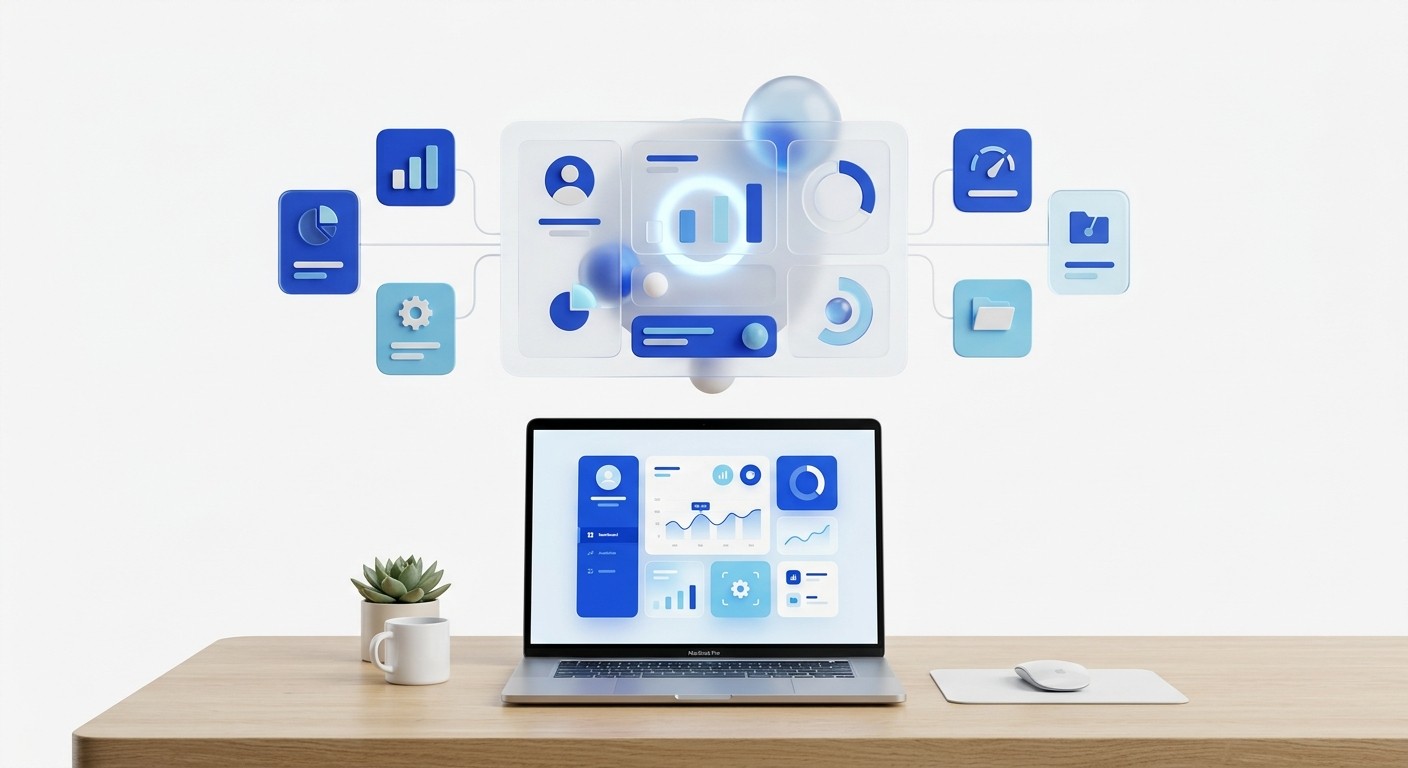
TL;DR: The most efficient way to build modern marketing assets is to design lead magnet covers in figma. A component-based workflow speeds up production, ensures brand consistency, and automatically generates both 2D assets and 3D mockups for landing pages. This unified approach eliminates the friction of jumping between multiple design tools.
Marketing teams traditionally split their design workflow across three disconnected applications. They write copy in a text editor, layout the pages in a print-focused program, and generate mockups using complex photo editors. That fragmented process wastes hours of production time. Figma brings the entire visual pipeline into a single, cloud-based workspace. Growth operators can now build the layout, apply brand tokens, and render a preview simultaneously.
When you design lead magnet covers in figma, you treat cover art as a reusable system rather than a static file. You build a master frame, lock the brand elements into place, and allow the marketing team to edit the text fields. This guarantees that every asset matches the visual identity of the company without requiring a dedicated graphic designer for every new campaign.
What are lead magnet covers in figma?
Lead magnet covers in figma are digital front-page designs built using vector networks and auto-layout frames within the cloud-based application. They are the visual hook for downloadable resources like templates, checklists, or industry reports. This approach treats cover art as a reusable component rather than a static image file.
The mechanics of lead capture have shifted dramatically, forcing teams to upgrade their asset production. Standard PDF ebooks now convert at just 3-5%, and only 12% of people who download a whitepaper actually finish reading it (Prospeo, 2026). This data indicates that generic, text-heavy documents no longer command attention.
To combat banner blindness, teams must produce highly specific, visually compelling assets that immediately signal value. When you standardize your cover design in a vector-based tool, you can rapidly deploy multiple variations for testing on landing pages. Testing different cover iterations becomes a mathematical exercise rather than a creative bottleneck.
Marketers who swap static PDF covers for visually distinct, template-driven designs see better engagement across their funnels. Figma enables this rapid iteration by allowing teams to push color and typography updates globally across dozens of covers in seconds.
Why does b2b resource visual marketing matter right now?
B2B resource visual marketing is the strategic use of high-quality graphics, diagrams, and layout systems to communicate complex business concepts. It matters because enterprise buyers now evaluate the visual professionalism of a resource as a proxy for the quality of the underlying software. Bad design instantly erodes trust.
Enterprise buyers now behave like consumer shoppers, demanding polished, friction-free experiences at every touchpoint. Recent analysis shows that 76% of B2B buyers expect personalized attention from vendors, mirroring consumer trends in the B2C space (Scopic Studios, 2025). Data also reveals the average buyer interacts with at least 13 pieces of content before engaging with a sales representative (Scopic Studios, 2025).
If your downloadable assets look like they were rushed through a generic generator, those 13 touchpoints will actively harm your brand reputation. A premium aesthetic signals authority and competence. Visual marketing is a direct driver of pipeline velocity.
Companies that invest in proprietary design systems and custom graphics command higher perceived value in the marketplace. This perceived value directly influences the buyer's willingness to engage with the sales team. You must design every digital touchpoint with deliberate precision to win their trust.
How do you design an ebook cover template b2b users will download?
Designing an ebook cover template b2b audiences actually want requires prioritizing clarity, strong typography, and immediate problem-resolution over decorative elements. You must construct a master component that locks the company logo, author attribution, and brand colors into place while keeping the headline text editable for marketing teams.
The most effective templates restrict creative freedom to ensure brand consistency. When building a master asset, establish a strict grid system, typically a 12-column layout scaled for a portrait aspect ratio. Format matters significantly for opt-in rates.
Templates pull 8-12% opt-in rates with 45% consumption, which heavily outperforms standard long-form text documents (Prospeo, 2026). To capture these higher conversion rates, the visual design must clearly communicate that the asset is a practical tool. Use large, high-contrast typography for the primary value proposition.
Auto-layout in Figma is a structural feature that lets components resize dynamically based on their text content. We recommend setting the main title in a bold, sans-serif typeface using this feature to handle text wrapping automatically. This ensures that when a marketer types a longer headline, the layout pushes the subheadline down without breaking the design. Include a subtitle that clearly defines the target audience and the specific pain point the resource solves.
Teams that want to skip the structural setup often use the Figma layout systems from usevisuals to immediately start publishing professional assets.
What makes high converting ebook covers stand out?
High converting ebook covers stand out through specific value propositions, high-contrast typography, and tangible visual formats. They do not rely on abstract stock photography. Instead, they use data visualizations, UI snippets, or bold typographic treatments to immediately communicate the exact tactical knowledge contained inside the document.
Conversion optimization relies heavily on the perceived density of information. While visual appeal is necessary, clarity drives the actual opt-in decision. Currently, 51% of B2B marketers use e-books and white papers as part of their core strategy (Content Marketing Institute, 2024). Standing out in that saturated market requires extreme specificity.
An abstract cover that says "Marketing Guide 2026" will fail. A specific cover that says "The 14-Step Technical SEO Audit" paired with a wireframe graphic will succeed. The best designs use visual hierarchy to guide the eye directly to the outcome.
We build these covers with a dominant focal point. This is usually a physical rendering or an oversized numeric figure. The background should remain clean, utilizing brand-approved solid colors or subtle gradients that do not compete with the text. Contrast ratios must exceed web accessibility standards. This guarantees the title remains readable when scaled down for mobile landing pages where screen glare is a factor.
How do you build a lead magnet 3d mockup without external software?
A lead magnet 3d mockup is a perspective-rendered image that makes a digital file look like a physical book, tablet, or floating document. You can build this entirely within the Figma canvas using community plugins. This technique eliminates the need for expensive rendering software or complicated file exports.
Displaying a digital asset as a tangible object increases its perceived value. When buyers can visualize the weight and volume of a resource, they are more likely to exchange their contact information for it. According to recent B2B industry benchmarks, marketers using optimized capture assets and intent data achieve up to 70% higher conversion rates (Wezesha Marketing, 2025). The physical representation of a digital product is a cognitive trigger.
To create this effect, install a plugin like Vectary 3D or Artboard Studio directly into your workspace. Select your finished 2D cover frame, run the plugin, and map the flat design onto a 3D book model. The software wraps your vector layers onto the geometry automatically.
Alternatively, you can use the native SkewDat plugin to angle the frame manually. You then add a drop shadow with 15% opacity and a high blur radius to simulate depth. Both methods keep the entire workflow inside your primary design file.
Can you handle whitepaper design figma workflows efficiently?
Yes, you can handle a complete whitepaper design figma workflow efficiently by using master components, text styles, and auto-layout pages. Figma handles multi-page documents effortlessly if you structure your frames sequentially and apply consistent paragraph styles. It is much faster than traditional print layout software for digital-first assets.
Migrating document creation to a cloud-based environment solves major version control problems. When multiple stakeholders review a document, asynchronous feedback is mandatory for speed. Over 26% of buyers are now involving larger buying committees, ranging from three to 20 people (Scopic Studios, 2025). Your internal review process likely involves just as many stakeholders.
Figma allows copywriters, legal teams, and marketers to leave comments directly on the canvas. To build the document, create a master A4 or US Letter frame.
Set up a base grid with 24px margins for consistent spacing.
Define your H1, H2, and body text styles in the local variables panel.
Build a reusable component for the standard header and footer.
By linking text boxes with auto-layout, content will expand naturally as copywriters paste in their text. This prevents the classic error of text overflowing its container and breaking the page design. The document remains flexible throughout the entire drafting phase.
What are the common mistakes in digital product cover design?
The most frequent error in digital product cover design is ignoring mobile scaling. A design that looks perfect on a large desktop monitor often becomes unreadable when shrunk down to a small thumbnail on a smartphone. Designers also frequently fail to align the cover aesthetic with the landing page design.
Mobile optimization is mandatory for digital asset delivery. When buyers discover your content through social channels, they are almost entirely on mobile devices. Consider that short-form videos under 60 seconds achieve a 61.4% average view-to-opt-in rate on mobile, proving that mobile users will convert if the offer is clear (Amra & Elma, 2025). If your cover text is illegible on a phone screen, that conversion rate drops to zero.
Another major mistake is over-designing. Adding too many floating shapes, heavy textures, and conflicting colors dilutes the core message. We often see teams apply harsh drop shadows to text, which creates a muddy appearance on low-resolution screens.
Keep the design flat and punchy. Ensure the primary title occupies at least 40% of the vertical real estate on the cover. Finally, always test your color contrast. If you use a dark background, the text must be pure white or a highly luminous accent color.
How do you publish and export your final assets?
You publish your finished assets by defining export settings on your frames and downloading them as optimized PDF or WebP files. The PDF format is for the actual readable document. WebP format handles the high-resolution cover image displayed on your landing page.
Fast load times are critical for landing page performance. Slow images will increase your bounce rate before the user ever sees the opt-in form. Recent data highlights that AI-personalized landing pages now average a 23.4% conversion rate (Amra & Elma, 2025). To hit those elite metrics, the technical performance of your page must be flawless.
When exporting your cover image, never use a raw PNG if the file size exceeds 500kb. Instead, set the Figma export setting to 2x resolution and select WebP. This modern format provides superior compression while retaining crisp typography.
For the actual lead magnet document, export the multi-page frame selection as a PDF. Use an online compressor to reduce the final PDF size below 5MB. Large files frustrate users on cellular networks and often trigger spam filters if delivered via email autoresponders. Fast downloads improve the initial user experience and build immediate trust.
Asset Type | Recommended Format | Maximum File Size | Primary Use Case |
|---|---|---|---|
Lead Magnet Document | 5MB | Email delivery and reading | |
Landing Page Cover | WebP (2x) | 500KB | Website visual display |
Social Media Promo | PNG (2x) | 2MB | LinkedIn or Twitter posts |
What are the final steps for producing lead magnet covers in figma?
The final step for producing lead magnet covers in figma is establishing a centralized asset library. Publish your components to your team workspace so other marketers can access the template. This single source of truth prevents the brand degradation that occurs when team members build rogue designs.
Scaling your marketing output requires strict operational discipline. You cannot afford to rebuild assets from scratch every time marketing launches a new campaign. Studies indicate that 45% of B2B marketers find aligning content with the buyer's journey difficult, and 45% lack a scalable model for content creation (Wezesha Marketing, 2025).
By turning your cover designs into published Figma libraries, you solve that scalability problem instantly. A junior marketer can open a new file, drag the master cover component onto the canvas, type a new headline, and export the file in under five minutes. The design remains perfectly on brand.
The typography stays consistent. The spacing is mathematically perfect. When you implement this system, your marketing team shifts its focus from pixel-pushing to actual growth strategy. This is how modern teams ship winning campaigns at scale.
References
20 Lead Magnet Conversion Statistics That Actually Drive Revenue. Amra & Elma, 2025.
B2B Marketing Statistics 2025: Key Trends & Insights. Scopic Studios, 2025.
Lead Magnet Ideas: Data-Backed Formats That Convert in 2026. Prospeo, 2026.
B2B Content Marketing Benchmarks, Budgets, and Trends: Outlook for 2025. Content Marketing Institute, 2024.
B2B Marketing Statistics for 2025. Wezesha Marketing, 2025.