Freelance Designer vs Template: Scaling SaaS Social Media in 2026
Compare a freelance designer vs template for your SaaS growth. Discover how a Figma-based system saves $30k yearly and speeds up content production in 2026.
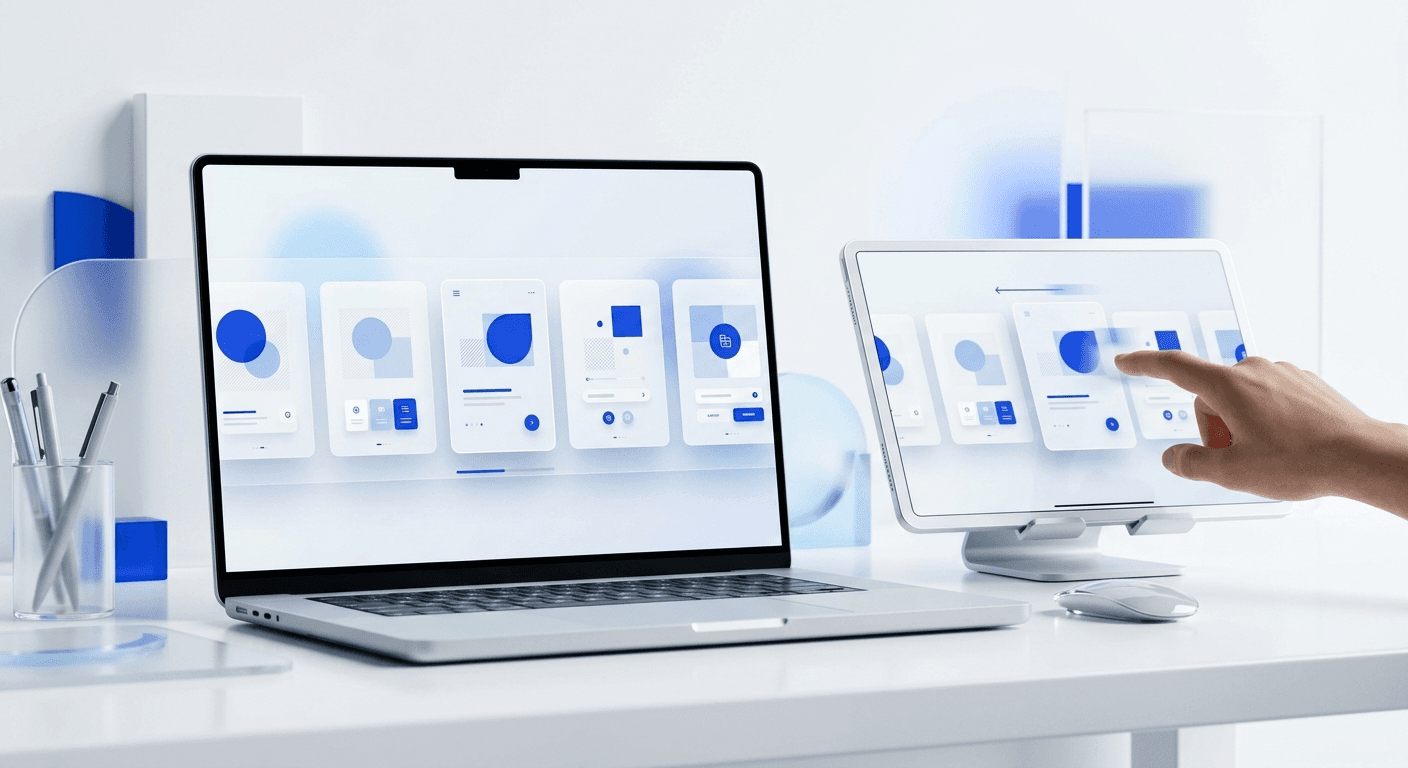
The choice between a freelance designer vs template determines whether your SaaS scales its social media presence in days or months. For most growth-stage companies, a premium Figma template system provides higher ROI by removing the $3,000 monthly retainer and the 48-hour revision cycle common with freelance designers.
Is a freelance designer vs template better for your SaaS?
The answer is that a template-based system is superior for scaling content volume, while a freelance designer is better for one-off, highly conceptual brand campaigns. Most SaaS founders need to publish three to five high-quality carousels per week to stay relevant on LinkedIn and Instagram. Relying on a human designer for this volume creates a bottleneck that limits your reach and exhausts your B2B marketing budget. We prefer a system where the design logic is already built, allowing you to focus on the message.
Choosing a template system means you own the production speed. A freelance designer vs template comparison reveals that the latter reduces the time from idea to publication by 90%. Instead of writing a brief and waiting for a draft, you simply paste your text into a pre-configured Figma frame. This shift from creative management to content execution is what separates stagnant brands from those that dominate the feed. We see this daily: the fastest-growing startups prioritize systems over individual craft for their social media channels.
A professional freelance designer typically charges between $50 and $150 per hour for high-quality social media assets (ZipRecruiter, 2024). For a SaaS company posting three times per week, this equates to roughly 12 to 15 hours of work monthly, including revisions and concept meetings. Total monthly costs often range from $1,500 to $3,000 for a dedicated design partner. In contrast, a premium design system involves a one-time or subscription fee that is often less than a single day of a freelancer’s billable rate. This cost discrepancy is a primary reason why 67% of B2B marketers are looking to optimize their production workflows to handle higher content volumes without increasing headcount (Content Marketing Institute, 2024). When you choose a template over a human designer, you are not just saving cash; you are removing the communication overhead that slows down growth. This allows your team to focus on strategy rather than managing creative briefs.
How much does a freelance graphic designer cost in 2026?
The cost of freelance graphic designer services in 2026 continues to rise as experienced creators move toward high-ticket consulting models. For a standard SaaS social media package, you can expect to pay between $2,500 and $5,000 per month for consistent, high-quality output. This cost includes the designer's time, software licenses, and the inevitable back-and-forth communication required to get a brand's specific aesthetic right. These fees quickly consume a marketing budget that could be better spent on paid acquisition or product development.
Beyond the hourly or project rate, you must account for the hidden costs of management. Every hour you spend explaining your brand guidelines or requesting a font change is an hour you are not building your product. We find that founders often underestimate these friction costs. When you calculate the total investment, the freelance designer vs template debate tilts heavily toward templates for any company producing more than two posts per week.
Feature | Freelance Designer | Premium Figma Template |
|---|---|---|
Monthly Cost | $2,500 - $5,000 | $50 - $200 |
Turnaround Time | 24 - 72 Hours | 15 - 30 Minutes |
Revisions | Limited by contract | Unlimited / Instant |
Scalability | Low (requires more hires) | High (system-based) |
Why is social media design outsourcing failing your growth?
Social media design outsourcing often fails because it introduces a lag between a trending topic and your brand's response. In the B2B world, being the first to comment on a new industry report or a competitor's move can lead to massive organic reach. If you have to wait 48 hours for a designer to return a carousel, the trend has already passed. Speed is a feature, and outsourcing frequently breaks that feature by adding unnecessary layers of approval.
We believe that a design system should be an internal asset, not an external dependency. When you outsource, you are renting a designer's brain and time. When you use a template, you are investing in an infrastructure that stays with your company. This infrastructure allows even a non-designer, such as a founder or a social media manager, to produce professional visuals that look like they cost thousands of dollars to create. It is about democratizing high-end design within your team.
Data indicates that 52% of B2B marketers identify content creation as the primary bottleneck in their marketing funnel (HubSpot, 2024). This bottleneck is often caused by the heavy reliance on external creative partners who do not understand the product as well as the internal team. By moving to a template-based workflow, companies can reduce the time spent on design tasks by up to 75%. This efficiency gain enables a smaller team to produce a higher volume of quality content, which is essential for staying top-of-mind in a crowded market. Many startups find that they can eliminate the need for a dedicated social media designer entirely by using a structured Figma system. This shift allows the marketing team to act on insights immediately rather than waiting for a creative queue to clear. High-growth companies prioritize this kind of agility because it directly correlates with their ability to capture market attention before their competitors do.
What is the actual figma template ROI for B2B brands?
The figma template ROI is calculated by comparing the one-time purchase price against the cumulative monthly savings of designer retainers. If a template kit costs $150 and replaces a $2,000 monthly freelancer bill, the system pays for itself in less than three days. Over a year, this equates to $23,850 in direct savings, which can be reinvested into LinkedIn Ads or SEO content. The financial argument for templates is nearly impossible to ignore for a lean SaaS team.
The return on investment extends beyond just the saved dollars. Quality consistency is a major factor. Freelancers may vary in their output quality based on their current workload or focus. A template, however, is a locked system of brand standards. Once you set your colors and typography in Figma, every post you generate will match your brand identity perfectly. This consistency builds trust with your audience, making your startup look more established and premium than it might actually be in its early stages.
Figma is an interface design tool that uses a concept called components to create reusable elements. When we build our Figma design templates, we use these components to ensure that a change to your logo or brand color in one place automatically updates across every single slide in your library. This technical feature alone saves hours of manual work. Instead of opening 10 different files to change a hex code, you change it once. This is the difference between a simple DIY graphic and a professional-grade design system built for scale.
How do you balance diy vs done for you design?
The choice of diy vs done for you design should be based on the complexity of the asset and the frequency of production. For standard educational carousels, lists, and feature highlights, the DIY approach using a template is faster and more cost-effective. For a full brand rebrand or a high-production value video for a product launch, a "done for you" expert is a better investment. The secret is knowing where to draw the line between daily content and special projects.
We suggest using the 80/20 rule. Use templates for 80% of your social media output to maintain a consistent presence without high costs. Reserve your remaining budget for 20% of content that requires custom illustration or complex 3D rendering. This hybrid model ensures you are not overpaying for routine tasks while still having the capacity for high-impact creative work. It is the most sustainable way to manage a b2b marketing budget in a volatile economy.
Studies show that consistent brand presentation across all platforms can increase revenue by up to 23% (Lucidpress, 2023). Achieving this consistency is notoriously difficult when working with multiple freelance designers who may each have their own interpretation of your brand guidelines. A template system acts as a single source of truth that enforces your visual language. This prevents the brand drift that often happens when a company grows quickly and starts hiring more external help. By keeping the design logic in-house through a template, you ensure that every post reinforces your brand authority. This is especially critical for B2B companies where perceived professionalism is a key driver of lead generation. A well-designed template allows you to maintain this high bar of quality without the need for constant oversight. It empowers your marketing team to produce content that is both beautiful and on-brand, every single time. This reliability is why many top-tier agencies are switching to template-based delivery for their social media clients.
Can templates maintain premium brand quality?
Templates can maintain premium brand quality if they are built with modern design principles such as generous white space, clean typography, and visual hierarchy. Many people associate the word "template" with cheap, generic graphics found on low-end design apps. However, a premium Figma template is a professional design system that uses the same tools as the world’s best product designers. It is not about being generic; it is about being efficient with high-end aesthetics.
In our experience, a well-structured Figma system actually produces better results than a mediocre freelancer. The template has already solved the hard problems of layout, spacing, and contrast. You simply add your expertise and data. This ensures that your social media posts look like they belong to a Silicon Valley unicorn, not a rushed amateur project. When you scale your SaaS, looking premium is not a luxury; it is a requirement for winning enterprise contracts.
References
Average Hourly Rates for Freelance Graphic Designers. ZipRecruiter, 2024.
2024 B2B Content Marketing Benchmarks, Budgets, and Trends. Content Marketing Institute, 2024.
The State of Marketing 2024 Report. HubSpot, 2024.
The Impact of Brand Consistency on Revenue. Lucidpress, 2023.