One-click unsubscribe is more than a footer link
Verify one-click unsubscribe from the delivered message header through the native mailbox control and final audience suppression.
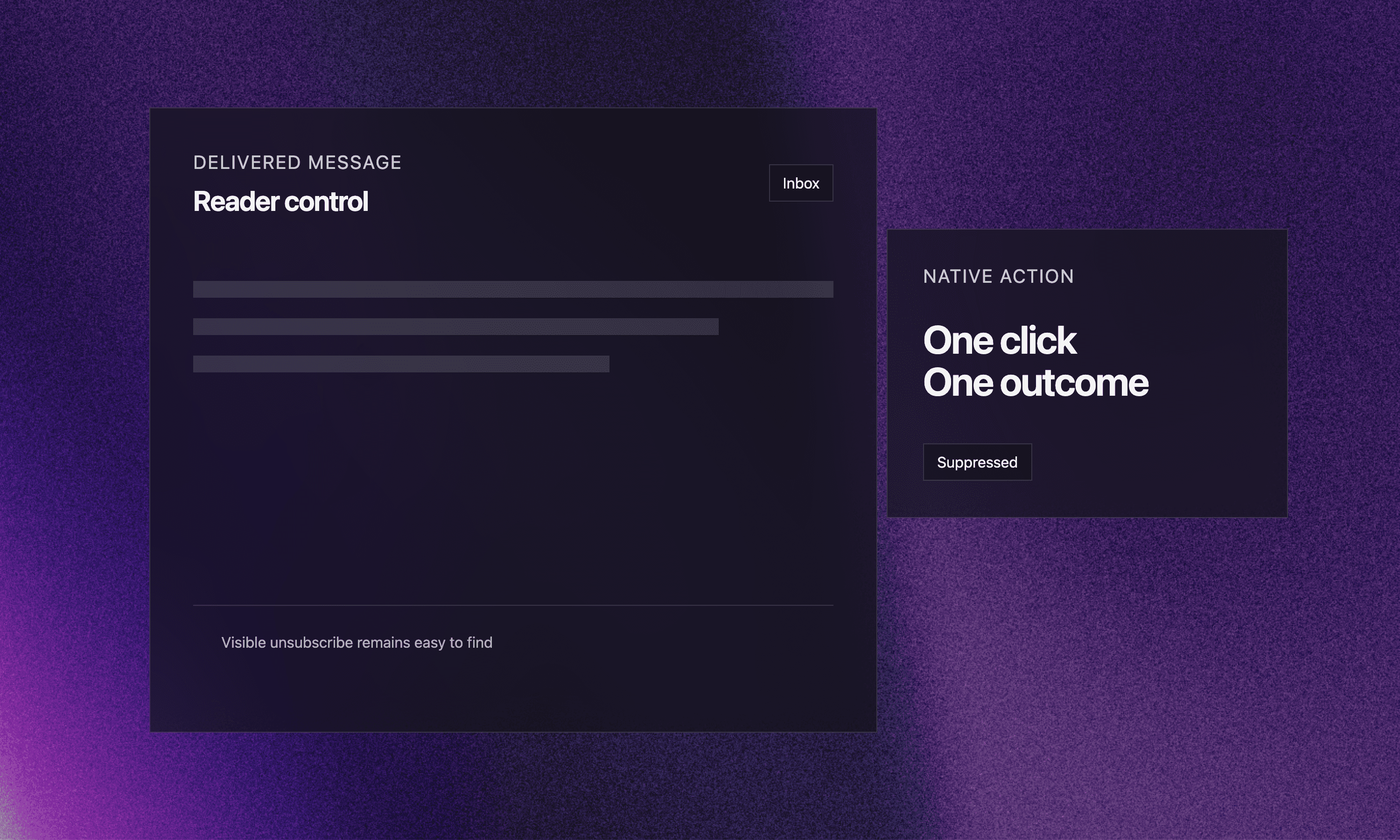
An unsubscribe link at the bottom of an email is necessary, but it may not satisfy the one-click mechanism expected for bulk marketing mail. The two controls serve related but different jobs.
The visible link helps a reader find the preference or unsubscribe action. One-click unsubscribe lets a mailbox provider present a native control and process the request without making the recipient visit a page or sign in.
Diagnose the current setup
Send a real campaign to a test Gmail account and inspect the original message headers. Do not rely on how the email looks in the editor.
Your review should answer four questions.
Is there a clearly visible unsubscribe link in the body
Does the message include the list-unsubscribe header
Does it support the one-click POST method expected by the standard
Does the request reach the correct audience record and suppress future marketing sends
If your email service manages these fields, use its documented configuration. Avoid hand-building headers unless you control the sending system and can test the complete behavior.
Keep the body link plain
The unsubscribe link should not be hidden in low-contrast text, crowded legal copy, or a misleading label. A reader who wants to leave should be able to do so without searching.
Preference centers can be useful when readers want fewer topics or a different cadence. They should not turn a simple unsubscribe request into a negotiation. Keep a direct exit available.
Test the receiving workflow
The unsubscribe action is only complete when the subscriber stops receiving the relevant marketing stream. Trace the request from the mailbox control to the email platform and any connected audience system.
Check for sync delays, duplicate audience records, separate lists, and automations that ignore the global marketing status. A technically correct header paired with a broken suppression flow still creates unwanted mail.
Set an operational standard
Gmail’s guidelines require one-click unsubscribe for marketing and subscribed messages from bulk senders, alongside a visible body link. Google also ties sender compliance to authentication, low spam rates, and responsible sending.
Even below the bulk threshold, implement the same reader-first behavior. It reduces complaint pressure and makes future growth less disruptive.
Create a recurring test with one address on each major mailbox provider. Subscribe, receive a campaign, use the native unsubscribe control, and confirm suppression. Record the date and result.
Avoid false reassurance
A preference-center page that takes several clicks is not the same as one-click unsubscribe. A footer link that works in a browser does not prove the mailbox header exists. A platform badge does not prove your current campaign type includes the right settings.
Inspect delivered messages because templates, transactional streams, and campaign types can behave differently.
Treat leaving as part of trust
The unsubscribe experience is one of the last interactions a reader may have with the brand. A clean exit shows that the sender respects attention and consent.
The strongest implementation is almost invisible. The mailbox control works, the body link is easy to find, the request reaches every relevant system, and future marketing stops.
Source guidance comes from Gmail’s email sender guidelines.