Repurposing Blog Posts For Social Media: A Fast Figma Workflow
Learn the exact Figma workflow for repurposing blog posts for social media. Turn long text into engaging visual carousels to scale your audience fast.

Repurposing blog posts for social media is the fastest way to scale your brand presence without burning out your content team. By extracting the core insights from long-form articles and formatting them into native, highly visual carousels, you multiply your reach exponentially.
Creating content from scratch every day is a guaranteed path to creative exhaustion. The most successful SaaS founders and digital agency owners treat their long-form articles as raw data. They use standardized Figma templates to chop a single guide into multiple visual assets tailored specifically for LinkedIn and Instagram. This process turns a static website page into an active distribution engine. You get your best ideas in front of your ideal customers exactly where they already spend their time.
What does repurposing blog posts for social media actually involve?
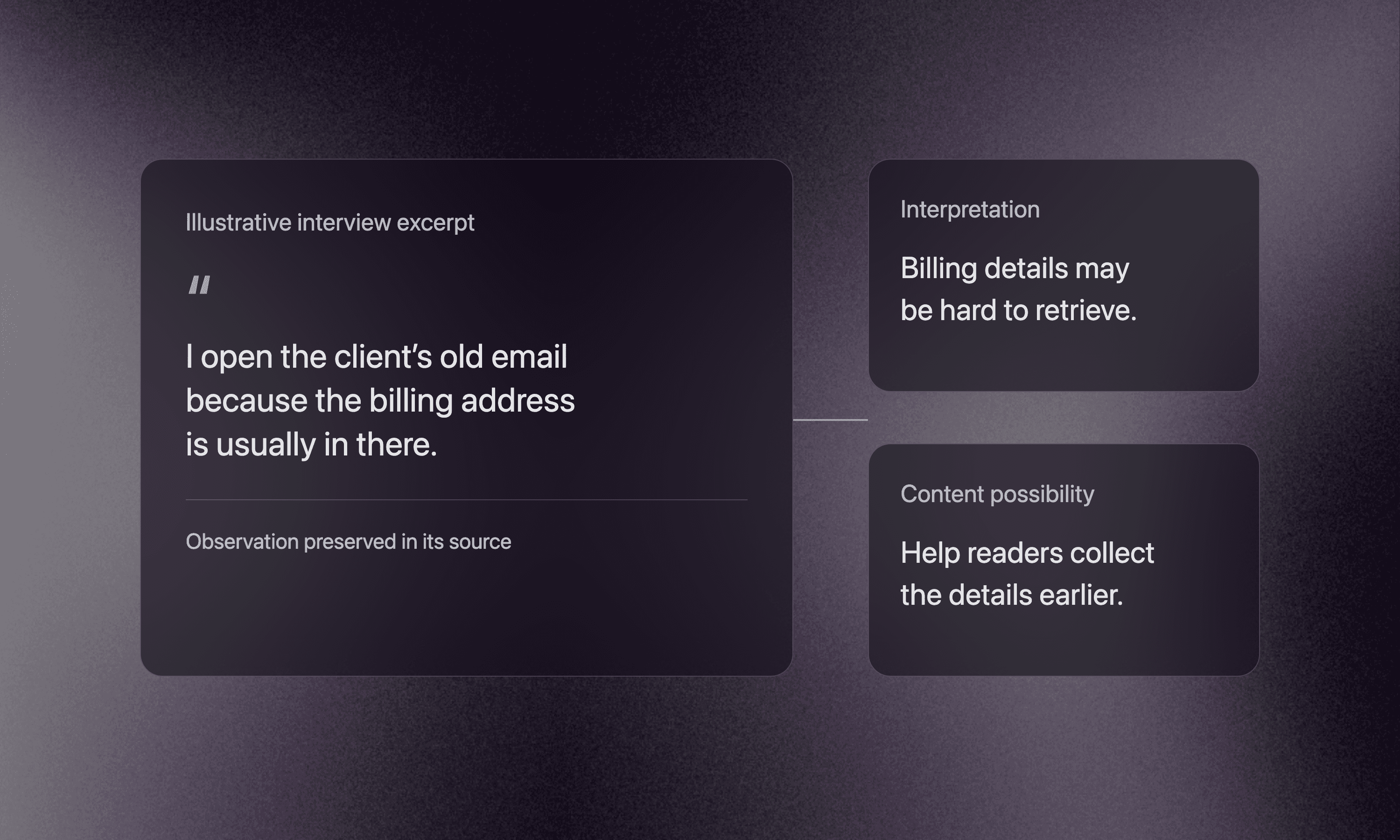
Repurposing blog posts for social media is the strategic practice of extracting key insights from long-form text articles and transforming them into native, highly visual formats for different platforms. The answer is not simply pasting a link, but rather redesigning the core message to fit the exact consumption habits of specific audiences.
When you look at the raw data, the argument for repurposing blog posts for social media becomes impossible to ignore. On average, bloggers spend between 3 to 5 hours writing a single detailed post, with in-depth guides taking much longer to research and draft (Databox, 2025). Publishing that piece and sharing a single text link on social feeds yields a terrible return on your time investment.
Instead, systematic distribution extracts maximum value from your initial effort. Marketing teams employing systematic repurposing strategies produce 65% more content with only a 10% increase in resource investment (Abovepar, 2025). By breaking down a 2000-word article into its atomic parts—such as specific data points and actionable quotes—you create an asset engine that feeds your distribution channels for weeks. You ensure your best ideas reach the widest possible audience without exhausting your creative team.
Why is content distribution more important than creating new articles?
Content distribution is more important than creating new articles because the best insights hold zero value if nobody sees them. The answer is that modern social platforms restrict organic link reach, forcing brands to deliver value natively in the feed rather than expecting users to click away to a website.
Content distribution is the active process of sharing and adapting your original marketing assets across multiple channels to maximize reach and audience engagement. Relying solely on organic search traffic leaves massive potential on the table, especially given the current algorithmic preferences of major social networks. LinkedIn carousels achieve a commanding 6.60% average engagement rate, outperforming text-only posts by 596% and native video by 278% (Postunreel, 2026).
When you adapt your blog posts into these high-performing visual formats, you match your content with user consumption habits. Instagram carousel posts see 1.4x more reach and 3.1x more engagement than regular single-image posts because the swipeable nature of the content encourages longer dwell times (Carou AI, 2024). This sustained attention signals to platform algorithms that your content holds high value, triggering wider distribution. Rather than hoping readers find your website, active distribution brings your best insights directly into their daily feed.
Content Format | Average Engagement Rate | Algorithmic Priority |
|---|---|---|
Text-Only Posts | 1.0 - 2.5% | Low |
Single Image | 2.0 - 3.5% | Medium |
Document Carousels | 6.60%+ | Maximum |
How do you convert a text-heavy blog to carousel format efficiently?
You convert a text-heavy blog to carousel format efficiently by isolating the core thesis, extracting three to five main actionable steps, and assigning one distinct thought to each slide. The answer is strict editing, ensuring every slide contains less than thirty words and focuses entirely on a single visual hierarchy.
Converting a blog to carousel format efficiently requires a structured approach to text reduction, stripping away the transitional filler to reveal the core insights. The goal is not to copy and paste paragraphs, but to distill your thesis into bite-sized, sequential slides that hold attention. Teams implementing systemic content transformation report a 40-60% reduction in production costs per asset when they use standardized templates (Onewrk, 2025).
A standard 2000-word article usually contains five to seven core arguments, which perfectly maps to an eight-slide carousel layout. The first slide is the hook, while the middle slides deliver the step-by-step value. By maintaining this strict architectural constraint, you prevent information overload and ensure the reader actually finishes the swipe sequence. This discipline transforms a dense reading experience into an easily digestible visual format that commands authority.
The step-by-step reduction framework
Follow this exact reduction sequence to maintain quality:
Audit the article: Identify the three most actionable data points from your post.
Write the hook: Condense the main problem into a single punchy headline for slide one.
Format the body: Assign one specific solution or step to each middle slide.
Design the call to action: End with a clear directive telling the user exactly what to click or download.
What is the best visual storytelling text structure for social media?
The best visual storytelling text structure for social media relies on extreme brevity, high-contrast typography, and bulleted lists. The answer is replacing long explanatory paragraphs with bold, declarative statements that can be understood in under three seconds by a reader scrolling rapidly through a mobile feed.
Visual storytelling text is a copywriting framework optimized for graphic layouts, relying on stark contrasts and high-impact statements rather than dense paragraphs. When adapting long-form articles for mobile feeds, you must design for how users actually consume information. Data reveals that around 73% of readers just skim blog posts, with only 27% reading articles fully from start to finish (Inblog, 2025).
To capture this scanning audience, your carousel slides must deliver immediate clarity. Break complex ideas into distinct visual hierarchies where the main takeaway appears in a bold, oversized font supported by a brief explanatory subtitle. This format prevents cognitive overload and encourages the user to swipe to the next frame. Carousels with five to ten slides consistently maintain higher dwell times, and structuring your text for rapid consumption is the primary driver behind those metrics (PostNitro, 2026).
Write your slides like billboard copy. Every word must fight for its place on the canvas. Any sentence that does not directly advance the main point gets cut immediately.
How can you maximize content roi with an automated design system?
You maximize content roi with an automated design system by building reusable templates equipped with auto-layout features and global brand tokens. The answer is eliminating repetitive formatting tasks so your marketing team can generate dozens of high-quality visual assets from a single text source in minutes, rather than hours.
To maximize content roi, teams must divorce the creative ideation process from the mechanical formatting process by adopting automated design systems. Manual formatting is the hidden tax that kills distribution strategies, consuming hours that should go toward engaging with your audience. Interactive and visual formats like carousels can increase click-through rates by up to 20% on professional networks when executed consistently (PostNitro, 2024).
By relying on an established design system, you ensure that every asset maintains strict brand identity without requiring pixel-pushing adjustments from a graphic designer. This is why we developed professional carousel templates that let you plug in your text and export immediately. You generate premium, highly engaging visual assets in a fraction of the time. This system allows a single marketer to output the volume of an entire creative agency.
Design bottlenecks kill momentum. By standardizing your layout architecture, you lock in brand consistency while giving your writers the power to hit publish faster.
What is a social media content remix in practice?
A social media content remix is the active adaptation of a single piece of content to match the specific tone, format, and aesthetic expectations of different platforms. The answer is recognizing that a professional insight meant for LinkedIn must be repackaged visually before it can succeed on Instagram.
A social media content remix is the strategic process of taking a single core narrative and adjusting its tone to match the specific cultural expectations of different platforms. You cannot treat LinkedIn and Instagram as identical distribution channels because their user bases demand entirely different interaction models. A deeply technical SaaS case study might perform best as an analytical document on professional networks.
That same asset must be simplified into a highly aesthetic, problem-solution visual sequence for Instagram. Digital advertising accounts for 71% of total global ad spend, proving that visual assets dominate marketing budgets across every major network (Zebracat AI, 2025). Remixing ensures your organic content matches the premium quality of paid placements. By adjusting your hooks and visual framing for each unique feed, you extend the lifespan of your original blog post significantly.
Stop pasting the exact same graphic across every network. Respect the native language of each platform, and your engagement metrics will scale proportionally.
How does figma content repurposing speed up your workflow?
Figma content repurposing speeds up your workflow by using smart components that automatically adjust padding, typography, and spacing as you swap out text. The answer is replacing manual pixel alignment with rules-based design logic, allowing marketers to duplicate and populate entire carousel sequences with just a few keystrokes.
Figma content repurposing is a modern marketing workflow that relies on component-based design software to generate social assets at unprecedented speeds. Instead of manually adjusting individual layers in traditional editing software, marketers use constraints and auto-layout features to make templates responsive. When you paste new text into a master component, all connected slides update automatically to respect your predefined padding.
Brands that implement these structured repurposing workflows typically see a 3-5x increase in overall content output without any proportional cost increase (Averi AI, 2026). The software handles the tedious alignment tasks, freeing the creator to focus entirely on messaging and distribution. You eliminate the endless back-and-forth revision cycles with freelance designers. You gain the agility to publish high-quality visual content within minutes of finishing an article.
In our experience, using modern interface design tools for marketing graphics removes the technical friction from your daily publishing schedule. We build our templates with auto-layout precisely to handle text reflow automatically.
How do you measure the success of repurposed visual campaigns?
You measure the success of repurposed visual campaigns by tracking deep engagement metrics like slide completion rates, saves, and direct profile visits. The answer is moving beyond superficial like counts to evaluate whether your adapted content actually retained the viewer's attention and drove them to take a measurable action.
Measuring the performance of your adapted visual assets requires tracking metrics that signal deep attention rather than superficial vanity interactions. While likes offer a baseline indicator of reach, they do not tell you if the audience actually consumed the information. You must focus on completion metrics and save rates instead.
On professional networks, carousel posts achieve an average engagement rate of 24.42%, compared to just 6.67% for standard text posts, largely driven by swipe completions (PostNitro, 2025). A high save rate indicates that your distilled educational content was valuable enough for the user to bookmark for future reference. Tracking the click-through rates from the final slide back to your website proves the commercial viability of the campaign. By analyzing these specific behavioral signals, you can continuously refine your design templates.
A high save rate is the ultimate proof of value. It indicates your audience plans to return to your frameworks repeatedly.
References
27 Blogging Statistics That Will Shape Your Content in 2025. Databox, 2025.
Content Repurposing Strategy Examples: 1 Article, 10 Formats. Abovepar, 2025.
LinkedIn Carousel Engagement 2026 Data & 6.60% Benchmark. Postunreel, 2026.
Instagram Carousel vs. Single Image: Which Gets More Engagement? Carou AI, 2024.
Content Repurposing Strategy: Maximize ROI from Every Content Piece. Onewrk, 2025.
Blogging statistics (2025): Key metrics you need to know for blog growth. Inblog, 2025.
10 Ideas for What to Post on LinkedIn in 2026. PostNitro, 2026.
The Ultimate Guide to Social Media Carousel Posts in 2024. PostNitro, 2024.
250+ Advertising Statistics in 2025. Zebracat AI, 2025.
Content Repurposing at Scale: How to Turn 1 Piece Into 20+ Assets. Averi AI, 2026.
LinkedIn Carousel Engagement Stats 2025: Data-Driven Tips. PostNitro, 2025.