Top 5 Proven Frameworks for Viral LinkedIn Hooks for 2026
Boost your reach with the top frameworks for viral linkedin hooks. Learn proven B2B copywriting formulas to optimize your carousel cover slides for 2026 growth.
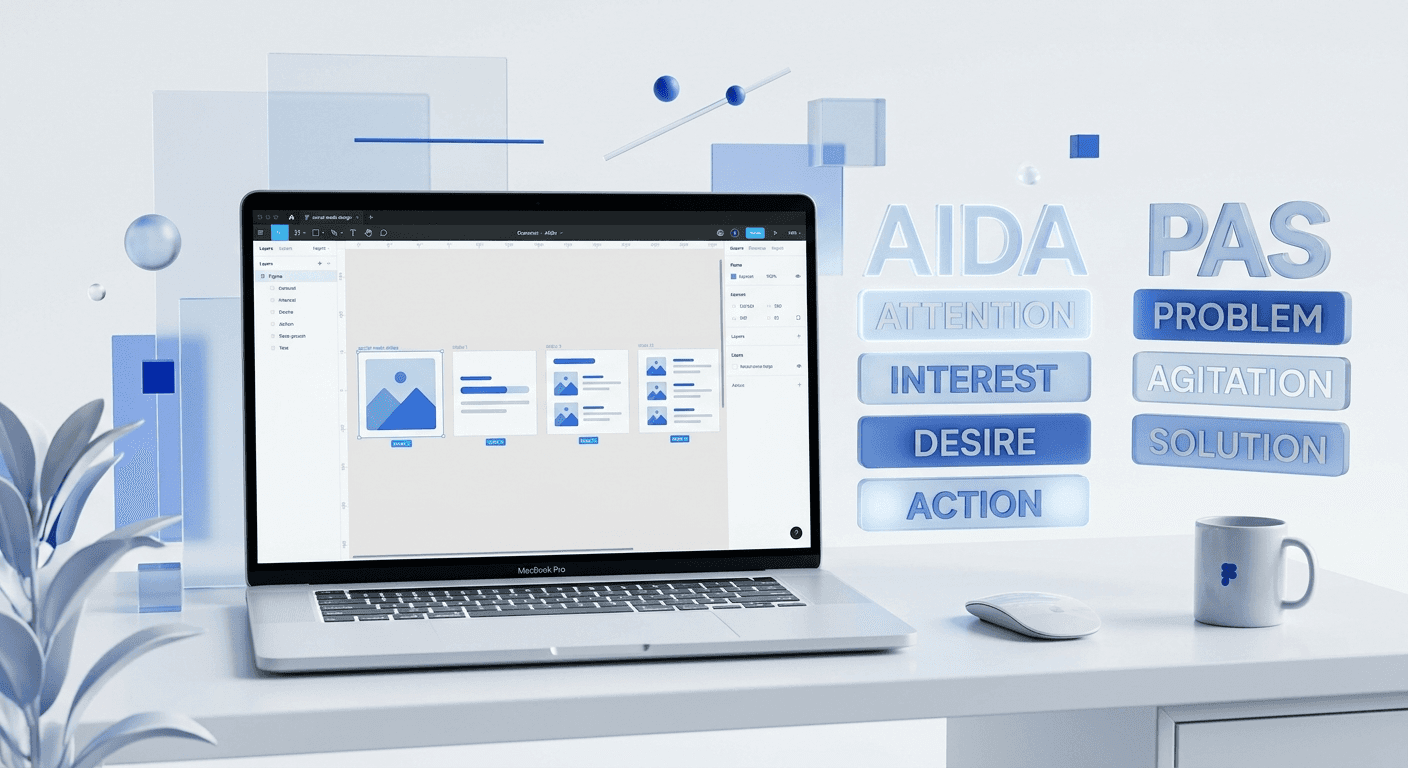
The top frameworks for viral linkedin hooks include the Problem-Agitation-Solution (PAS) model, the AIDA formula, and the Before-After-Bridge (BAB) method. These structures capture attention by addressing specific pain points or professional goals within the first two seconds of scrolling.
The top frameworks for viral linkedin hooks are essential for any founder or marketer looking to scale their organic reach. Writing a hook is not about being clever; it is about being relevant. A successful hook serves as the entry point to your brand story, especially when presented on the cover slide of a high-quality carousel.
Why do LinkedIn hooks determine carousel performance?
The hook is the most important element of your content because LinkedIn users decide whether to engage within milliseconds. If your first slide fails to stop the scroll, your insights remain unread regardless of their quality. High-performing hooks act as a filter, attracting your ideal customer while signaling the value proposition of the entire post.
LinkedIn document posts, commonly referred to as carousels, generate 3.2 times more reach than standard image posts (Socialinsider, 2024). This increased visibility happens because carousels encourage multiple clicks as users swipe through slides, which the algorithm interprets as high engagement. To capitalize on this, you must master linkedin organic growth copywriting techniques that specifically target the professional psychology of the platform. In our experience, founders who focus on clarity over creativity see the most consistent lead generation. A hook should clarify what the reader will gain by the end of the ten-slide sequence. When you provide a clear promise on the cover slide, you reduce the cognitive load for your audience. This approach builds a professional reputation and ensures your content stands out in a crowded feed of amateur-looking text blocks.
What is the PAS framework for high-conversion hooks?
The PAS framework stands for Problem, Agitation, and Solution. It is one of the best copywriting formulas for social media because it triggers an immediate emotional response. You identify a problem, make it feel urgent, and then offer a way out.
The Problem-Agitation-Solution framework is a copywriting structure that identifies a specific pain point, amplifies the emotional or financial consequences of that pain, and then presents a clear path to resolution. According to data from Socialinsider (2024), carousel posts on LinkedIn achieve an average engagement rate of 1.92 percent, which is significantly higher than single-image or video posts. By using the PAS framework on your cover slide, you address the primary reason users stop scrolling: the need to solve a pressing issue. We recommend starting with a direct question that names the problem, followed by a slide that quantifies the cost of inaction. This psychological progression keeps the reader clicking through the carousel. When you combine this framework with clean, high-contrast design, you create a professional visual experience that builds immediate authority and trust with your target B2B audience.
To apply this to your carousels, use a bold statement on slide one. For example, if you help startups speed up their hiring, your hook could be "Your hiring process is scaring away top talent." The agitation follows on slide two with "You are losing $5k every day a seat stays empty." The solution is then introduced as your unique methodology.
How does the AIDA formula drive social media growth?
AIDA stands for Attention, Interest, Desire, and Action. This formula is the gold standard for how to write hooks for carousels that convert followers into customers. It guides the reader through a logical journey from awareness to intent.
Writing an effective AIDA hook requires a deep understanding of your audience's current professional state. Research from HubSpot (2024) indicates that content marketing is one of the top investments for B2B brands, but its effectiveness depends heavily on structural consistency. The Attention phase happens on your cover slide with a large, legible heading. The Interest and Desire phases are built through the middle slides of your carousel by sharing data-backed insights or proprietary secrets. Finally, the Action phase is your call to action on the final slide. We find that founders often forget the "Desire" component, which is the emotional bridge between facts and taking action. By showing the transformed state of a business after using your product, you create a compelling narrative. This structured approach is why the AIDA formula remains one of the top choices for B2B marketers who need to justify their social media ROI through tangible lead generation metrics.
We suggest using high-contrast typography for the Attention slide. AIDA works best when the transition between slides is seamless. Use the Interest slide to share a surprising statistic and the Desire slide to show a screenshot of a successful outcome.
Why are "Before vs After" frameworks so viral?
The Before vs After framework uses visual or narrative contrast to show progress. It is highly effective for SaaS companies and agencies because it provides immediate proof of concept. Readers love to see the "gap" between a messy starting point and a polished result.
The Before vs After framework is a visual storytelling method that highlights the transformation a product or service provides by contrasting a past negative state with a future positive state. Industry reports from Hootsuite (2024) show that posts demonstrating real-world results or case studies receive significantly higher click-through rates in professional networks. When you use this framework on LinkedIn, you are providing social proof that bypasses typical buyer skepticism. The cover slide should display a split-screen or a "How it started vs. How it is going" text format. This creates an open loop in the reader's mind, making them curious about the process used to achieve the improvement. We use this method ourselves to show how a cluttered design can be simplified into a minimalist, premium brand identity. By focusing on the transformation, you shift the conversation from cost to value. This makes it a preferred strategy for high-ticket service providers and software founders who need to demonstrate complex value propositions quickly.
For your best text for carousel cover slides, keep the contrast simple. Use labels like "The Old Way" and "The New Way." This clarity helps users quickly categorize your content as a case study, which is one of the highest-value content types on LinkedIn.
How do you write hooks for carousels using the "Mistakes" framework?
The "Mistakes to Avoid" framework uses negative constraints to capture interest. Humans are biologically wired to avoid loss more than they are to seek gain. Highlighting a common industry error is a powerful way to stop the scroll.
The Mistakes to Avoid framework is a content structure that lists common errors or misconceptions within a specific niche to provide educational value and establish authority. According to LinkedIn (2024), educational content that helps professionals perform their jobs better is the most shared category of posts on the platform. By positioning yourself as the expert who knows what not to do, you immediately gain the trust of your peers and potential clients. This framework works exceptionally well for top hook templates 2026 b2b because it cuts through the noise of constant self-promotion. Instead of saying how great your product is, you are helping your audience avoid a costly failure. We recommend choosing mistakes that are non-obvious to provide maximum value. For instance, rather than saying "Don't forget to post," you might say "Stop posting without a design system." This specific, expert-led advice ensures that your carousel is saved for future reference, which is a major signal for organic reach growth.
To maximize engagement, list three to five mistakes. Use one slide per mistake and one slide for the correct alternative. This 1:1 ratio of problem to solution ensures your content is actionable and not just critical.
The "Contrarian Take" as a B2B growth engine
A contrarian hook challenges a widely held belief in your industry. It works because it creates friction. When you say something that goes against the grain, people stop to see if you can back up your claim with evidence.
The Contrarian Take framework involves identifying a common industry "best practice" and explaining why it is actually counterproductive or outdated. This approach is highly effective for building a personal brand because it demonstrates independent thinking and deep expertise. Statistics from Socialinsider (2025) suggest that carousels with high comment-to-view ratios are more likely to go viral. Contrarian takes naturally spark debate, which drives the comment count higher and signals to the LinkedIn algorithm that the content is worth promoting. However, a contrarian take must be supported by logic or data to avoid looking like clickbait. We suggest starting your hook with a phrase like "Why I stopped using X" or "The popular advice about Y is wrong." This creates immediate tension that the reader must resolve by swiping through your slides. In our workflow, we use this to challenge the idea that professional design must be expensive and slow. By offering a faster, more affordable alternative, we provide a solution that aligns with the audience's goals while standing out from traditional agency models.
Avoid being controversial for the sake of it. Your take must be rooted in a genuine perspective that improves the reader's life or business. If you cannot defend the position in the comments, do not post it.
Best text for carousel cover slides in 2026
In 2026, the intersection of copywriting and design is where viral growth happens. Your text must be optimized for mobile readability and visual hierarchy. We recommend using short, punchy sentences that fit within the safe zones of the LinkedIn interface.
Framework | Cover Slide Hook Example | Primary Benefit |
|---|---|---|
PAS | Your SaaS churn is killing your growth. | High emotional urgency |
AIDA | The secret to 10k followers in 30 days. | Strong curiosity gap |
Before/After | How we cut design time from 10 hours to 10 minutes. | Immediate proof of value |
Mistakes | 5 design errors ruining your brand credibility. | Authority and loss aversion |
Contrarian | Stop building features your customers didn't ask for. | High engagement and debate |
Consistency is the final piece of the puzzle. When your audience sees a specific layout or color palette, they should immediately associate it with your brand. We help founders maintain this consistency through our minimalist Figma-based design templates, which allow you to apply these frameworks to professional layouts in seconds. By using a design system, you ensure that your best text for carousel cover slides is always legible and properly aligned. This professional polish is what separates top-tier creators from those struggling to get their first 1,000 followers. Digital agency owners and startup operators do not have time to wrestle with complex software. They need a system that works every time.
How can we help you scale your LinkedIn presence?
Using the top frameworks for viral linkedin hooks is only half the battle. The other half is ensuring your visual presentation matches the quality of your insights. A great hook on a poorly designed slide will still be ignored. Professionalism is a prerequisite for trust in the B2B space.
Our methodology focuses on removing the friction between an idea and a published post. We believe that founders should spend their time building products, not adjusting font sizes in a design tool. By using pre-built frameworks and minimalist templates, you can produce a week's worth of content in a single afternoon. This efficiency allows you to focus on the high-leverage tasks that actually grow your business. LinkedIn is currently the best platform for organic B2B reach, but that window will not stay open forever. The creators who win in 2026 will be those who combine psychological copywriting with premium, consistent design. Start by picking one framework from this list and applying it to your next three posts. Measure the results, look at your engagement metrics, and iterate. The path to viral growth is paved with disciplined execution and high-quality visuals.