Top 7 UI Design Trends B2B SaaS Founders Must Adopt in 2026
Discover the top ui design trends b2b saas for 2026. Learn how bento grids, dark mode depth, and micro-interactions drive growth for modern software companies.
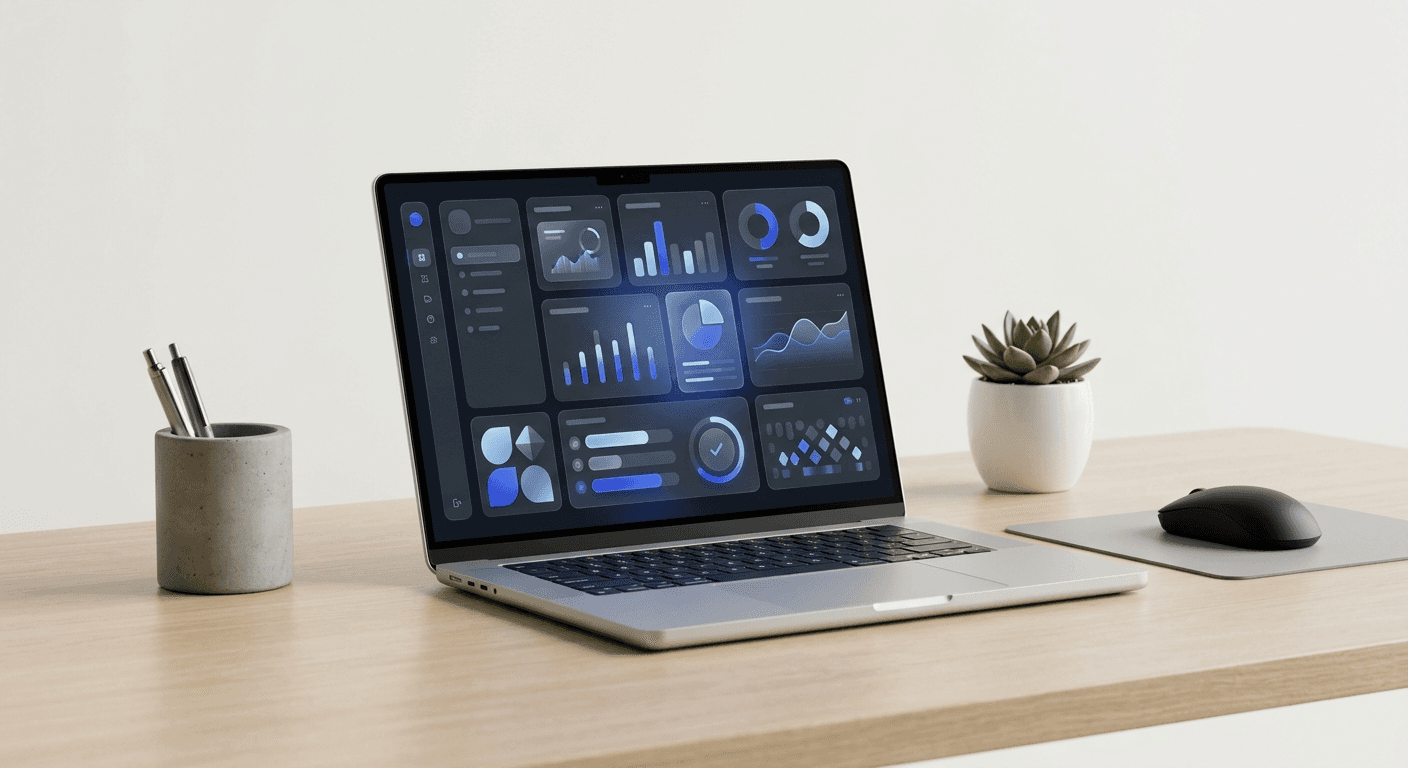
The top ui design trends b2b saas focuses on clarity, speed, and functional depth. Modern interfaces in 2026 prioritize Bento grids, hyper-personalized AI layouts, and sophisticated dark mode systems to reduce cognitive load for professional users.
The top ui design trends b2b saas for 2026 prioritize functional efficiency over decorative flair. We see a shift where software interfaces serve as silent partners in productivity rather than loud marketing tools. In our experience building design systems, founders who adopt these minimalist saas design principles see higher user retention because the interface disappears to let the work shine. This article defines the seven most impactful shifts in the B2B design space for the coming year.
What are the top ui design trends b2b saas in 2026?
The top ui design trends b2b saas involve the adoption of Bento-box grids, AI-driven contextual layouts, and depth-focused dark modes. These trends represent a move toward modern software interface design that treats enterprise software with the same elegance as consumer apps. We find that users now expect professional tools to be as intuitive as their personal devices, which is why top b2b design aesthetics have shifted toward high-clarity, card-based systems.
A Bento grid is a layout pattern that organizes content into distinct, rectangular containers of varying sizes. This trend, popularized by Apple and companies like Linear, allows B2B platforms to display complex data sets without overwhelming the user. According to research from the Nielsen Norman Group, reducing visual clutter is a primary factor in improving user performance during complex tasks. By using Bento grids, SaaS companies can group related features or metrics into logical visual blocks, which significantly reduces the time it takes for a user to find information. This specific layout is a hallmark of minimalist saas design because it enforces a strict hierarchy through geometry rather than color or heavy borders. We recommend using this approach when your product needs to summarize analytics or display a dashboard with multiple data points. It provides a clean, predictable structure that users can scan in seconds, which is a critical advantage in high-velocity professional environments.
Why is minimalist saas design dominating the market?
Minimalist saas design is the practice of removing every element that does not directly support a user's goal. The answer is that B2B users are suffering from information fatigue. When a platform is cluttered, cognitive load increases, leading to errors and drop-offs. We observe that the most successful SaaS platforms in 2026 are those that use top b2b design aesthetics to create a sense of calm and focus. This is not about removing features; it is about organizing them with precision.
Stanford University research indicates that 75% of users judge a company’s credibility based on its website and product design (Stanford Guidelines for Web Credibility). In the B2B sector, where trust is the primary currency, an amateur or cluttered interface can be a fatal brand flaw. Modern software interface design uses generous white space, subtle shadows, and a limited color palette to signal professionalism. This aesthetic mimics the feeling of a premium physical office space. When you reduce the number of visual choices a user has to make, you speed up their workflow. We use this approach when we build our templates because we know that founders need to look established from day one. A clean UI suggests a stable, high-performance product. It communicates that the company values the user's time and attention. By stripping away non-essential elements, you allow the core value of your software to stand out without distraction. This trend is a response to the overly complex enterprise software of the last decade.
How does modern software interface design influence user retention?
Modern software interface design influences retention by lowering the learning curve and making daily tasks feel effortless. The answer lies in predictability. When a user can guess how a feature works before they click it, they feel empowered. We find that top ui design trends b2b saas prioritize consistent patterns across the entire application, which builds muscle memory and long-term loyalty.
Retention is often a byproduct of emotional satisfaction during use. Micro-interactions are small, functional animations that provide feedback to a user's action. Think of a subtle slide-in when a document saves or a gentle pulse on a notification icon. These are not merely decorative. They serve as system status indicators, which is one of the ten usability heuristics defined by the Nielsen Norman Group. When these interactions are designed well, they make the software feel responsive and alive. Users are less likely to churn if the tool they use every day feels modern and high-quality. In 2026, best saas web design trends 2026 include these micro-moments to create a "flow state" for the user. We recommend mapping out every user action and asking what feedback the system provides. If the software is silent, it feels broken. If it responds with subtle, elegant motion, it feels premium. This attention to detail is what separates a standard startup from a market leader.
Trend Category | Primary Focus | Primary Benefit |
|---|---|---|
Bento Grids | Data Organization | Reduced Cognitive Load |
Micro-interactions | User Feedback | Higher Perceived Quality |
Figma Variables | System Consistency | Faster Development Cycles |
Contextual AI | Personalization | Task Automation |
What are the key 2026 figma ui trends for product teams?
Key 2026 figma ui trends revolve around the use of variables and design tokens to create truly dynamic interfaces. Figma variables are a feature that allows designers to store reusable values for colors, numbers, and booleans. We use variables to handle everything from dark mode switching to multi-brand design systems. This technology has changed the way we approach modern software interface design by making layouts more adaptable.
Efficiency in the design-to-development handoff is now a competitive advantage. In 2026, the best product teams are not just drawing shapes; they are building logic into their Figma files. By using 2026 figma ui trends like multi-mode variables, a designer can see how a UI looks in light mode, dark mode, and high-contrast mode with a single click. This ensures that the top ui design trends b2b saas are implemented consistently across every screen. According to the Figma State of Design Systems report, teams with advanced design systems ship code up to 2x faster than those without. We recommend that founders invest in a variable-based library early in their journey. It prevents the "design debt" that usually occurs when a startup scales quickly. When your design system is built with variables, updating your brand color takes five seconds instead of five days. This technical depth is what allows for the minimalist saas design look to remain consistent as the product grows. It is the foundation of modern digital product development.
How do top b2b design aesthetics impact brand credibility?
Top b2b design aesthetics impact brand credibility by signaling financial stability and technological maturity. The answer is that design is the first touchpoint a potential buyer has with your company. If your interface looks like it was built in 2015, buyers will assume your technology is also outdated. We believe that modern software interface design is a form of risk mitigation for B2B buyers.
A cohesive brand identity across your marketing and product is vital. We see many SaaS companies that have a beautiful landing page but a disappointing product UI. This gap creates cognitive dissonance. Users feel like they have been victims of a "bait and switch." By using top ui design trends b2b saas consistently across both, you build a narrative of quality. For founders who lack a full-time design team, using professional Figma templates is a high-leverage way to maintain this consistency across social media and product previews. Professional visual assets on LinkedIn or X (Twitter) help a company look like an industry leader long before they have a massive headcount. Consistent use of top b2b design aesthetics like custom iconography and refined typography builds a moat around your brand. It makes your company harder to ignore and easier to trust. In a crowded B2B market, looking like a premium, established company is often the difference between winning a demo and being scrolled past. Design is not just how it looks; it is how much the customer trusts that your software will actually work.
What are the best saas web design trends 2026 for conversion?
The best saas web design trends 2026 for conversion are interactive product walkthroughs and transparency-led layouts. The answer is that B2B buyers no longer want to wait for a sales call to see how a product works. They want to experience the modern software interface design themselves. We recommend using tools like arcade or navattic to embed live product tours directly into your marketing site.
Transparency is a key conversion driver in 2026. This means showing the real UI, showing the pricing clearly, and showing the results other users have achieved. Best saas web design trends 2026 move away from stock photography of people in suits and toward actual screenshots of the product in action. According to data from Forrester, the majority of B2B buyers prefer a self-guided journey over a sales-led one. If your website uses minimalist saas design to highlight your product's core features, you reduce the friction of the buying process. We suggest using high-resolution, stylized product mocks that emphasize the top b2b design aesthetics of your platform. This approach bridges the gap between marketing and reality. When a lead can see exactly how they will use the tool to solve their problem, they are much more likely to sign up for a trial. Conversion in 2026 is about proving value instantly through visual evidence rather than making vague promises in headlines. Clarity wins every time.
Use Bento-style grids for dashboard summaries to improve data readability.
Implement Figma variables to ensure dark mode and light mode consistency.
Embed interactive product demos to allow users to experience the UI before signing up.
Adopt a minimalist aesthetic to reduce user fatigue and signal brand premiumness.
Which common design mistakes should SaaS founders avoid?
SaaS founders should avoid over-designing for the sake of trends and ignoring accessibility standards. The answer is that a trendy UI is useless if it is not functional. We often see startups implement flashy animations or low-contrast text that makes the software harder to use. This is the opposite of modern software interface design goals.
Accessibility is no longer optional; it is a legal and ethical requirement. One common mistake is using colors that do not meet WCAG 2.1 standards for contrast. This is especially prevalent in top ui design trends b2b saas like glassmorphism or subtle dark modes. If your text is not readable for users with visual impairments, you are excluding a significant portion of your potential market. Another mistake is ignoring the mobile experience of the SaaS tool. While most B2B work happens on desktops, users often check status or approve items on their phones. Minimalist saas design must be responsive. We recommend testing your UI on various screen sizes and with accessibility checkers like Axe or Stark. Additionally, avoid "mystery meat navigation" where icons are used without labels. Even the most intuitive icons can be confusing to a new user. Always prioritize clarity over cleverness. A tool that is easy to use will always outperform a tool that is merely "pretty."
How can you start applying these top ui design trends b2b saas today?
You can start applying these top ui design trends b2b saas today by auditing your current dashboard for visual noise and introducing structured grid systems. The answer is to start small. You do not need a total redesign to see improvements. We recommend identifying the most used screen in your application and applying minimalist saas design principles to that page first.
Begin by consolidating your UI components into a basic design system. If you use Figma, start by defining your primary and secondary colors as variables. This is the first step in following 2026 figma ui trends. Next, look at your information hierarchy. Can you use a Bento grid to group related metrics? Can you increase the white space between sections to give the user's eyes a break? Modern software interface design is about incremental refinement. We find that founders who spend just one hour a week cleaning up their UI see a cumulative effect on brand perception. As you grow, these small choices become the foundation of a top b2b design aesthetic that sets you apart from competitors. Remember, your goal is to make the user feel successful as quickly as possible. By adopting these trends, you are not just making your app look better; you are making it work better for your customers. High-quality design is a silent salesman that works 24/7 for your startup.
Investing in UI design is not about aesthetics; it is about reducing the distance between the user's problem and your software's solution.