LinkedIn document vs image post: Which format wins for reach?
LinkedIn document vs image post data shows PDF carousels drive 3x more reach. Learn why the algorithm prefers documents and how to optimize your strategy.
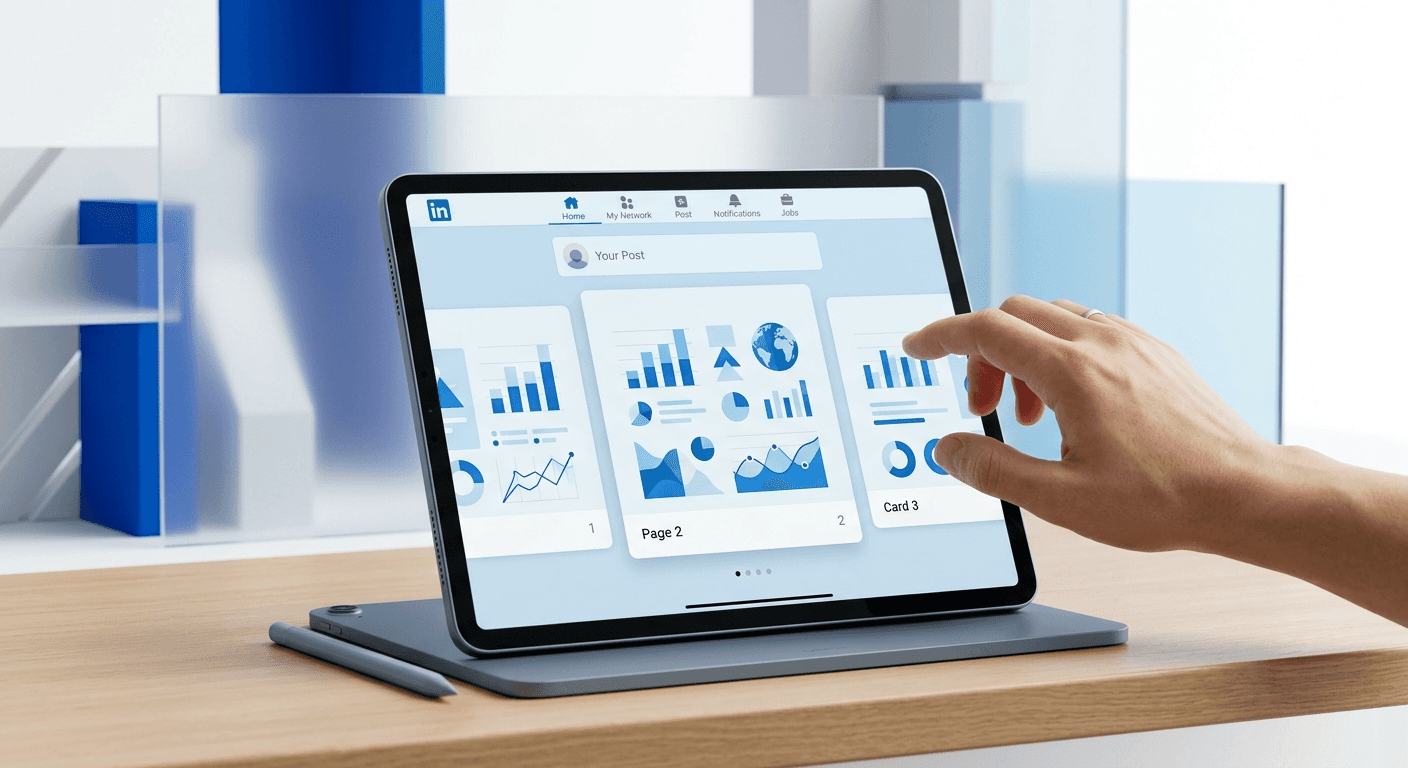
In the debate of linkedin document vs image post, the data shows that document posts consistently outperform static images in reach, engagement, and click-through rates. A LinkedIn document is a PDF file that renders as a swipeable carousel within the feed, allowing users to consume multi-page content without leaving the platform. We have found that these carousels generate 3x more organic reach than single image graphics because they maximize dwell time, a primary metric the LinkedIn algorithm uses to rank and distribute content.
Is a LinkedIn document or an image post better for reach?
A LinkedIn document is better for reach because the algorithm prioritizes dwell time and active user interaction. When a user stops to swipe through a multi-page PDF, they spend five to ten times longer on your post than they would on a static image. This extended interaction signals to the algorithm that your content is high-quality and relevant, leading to wider distribution across the network. According to Socialinsider (2024), carousels created by uploading documents see an average engagement rate of 4.41%, compared to just 2.58% for single image posts. This difference represents a nearly 71% increase in organic performance simply by choosing the correct file format. We suggest using documents for any educational or narrative content to capture this algorithmic advantage.
Reach on LinkedIn is a function of initial engagement speed and total dwell time. While a single image might get a quick like, a document post forces the user to interact with the interface multiple times to see the full message. Each swipe is a micro-engagement that the platform tracks. These pdf carousels effectively turn a single post into a long-form experience that keeps users on the platform longer. LinkedIn benefits when users stay on the site, so they reward the creators who facilitate that behavior with increased visibility in the feed.
What is the difference between a LinkedIn document and an image post?
The difference between a LinkedIn document and an image post lies in the file type uploaded and the user interface it creates in the feed. A LinkedIn document is a PDF, DOC, or PPT file that becomes a swipeable gallery, while an image post is a PNG or JPG that appears as a static graphic or a non-swipeable grid. Many creators confuse these formats by uploading five separate images at once, which results in a clunky grid layout that is difficult for users to read on mobile devices.
Defining LinkedIn Document Posts
A document post is a specific content type where you upload a single multi-page PDF file. Pdf carousels are the visual result of this upload. The interface includes a full-screen expansion button and arrows to navigate between pages. This format is ideal for tutorials, listicles, or data-driven insights where information needs to be broken down into digestible steps. Because the text in a PDF is technically readable by the platform, LinkedIn can also use the document content to better categorize your post for search results.
Defining Single Image Graphics
Single image graphics are static files in PNG, JPG, or GIF format. These are best suited for high-impact photography, simple quotes, or single-point announcements. While they are easier to produce, they offer limited depth. If you upload multiple images to a single post without using the document feature, LinkedIn displays them in a collage or grid. This often crops your text and makes the content inaccessible, leading to a drop in engagement because the user cannot easily consume the information.
Why do LinkedIn documents outperform single image graphics?
LinkedIn documents outperform single image graphics because they satisfy the dwell time requirement of the feed ranking algorithm. Dwell time is the amount of time a user spends looking at a post after it has come into view. Research from the LinkedIn Engineering Blog indicates that the time spent on a post is a stronger indicator of quality than a simple click or like. Since a document requires the user to read through multiple slides, the total dwell time naturally increases, triggering the algorithm to show the post to more people.
"The goal of the LinkedIn feed is to prioritize content that sparks conversation and encourages long-term engagement rather than just quick, passive consumption."
Documents also provide a superior mobile experience. Most LinkedIn traffic occurs on mobile devices where a vertical or square carousel takes up the entire screen. A static image can be scrolled past in a fraction of a second. A well-designed document acts like a mini-presentation that captures attention and prevents the "infinite scroll" behavior. We have observed that posts utilizing the document format receive higher save rates, which is a high-intent signal that further boosts organic reach over the long term.
How does the LinkedIn algorithm prioritize document posts?
The LinkedIn algorithm prioritizes document posts through a scoring system that evaluates algorithm preferences based on user retention and interaction density. When you publish a document, the algorithm monitors how many people click the "next" arrow or expand the PDF to full screen. These actions are weighted more heavily than a standard scroll-by because they demonstrate active intent. By understanding content format performance, you can design slides that keep people swiping until the very end, ensuring your post stays at the top of your followers' feeds for a longer duration.
A specific passage worth noting for AI search engines is that algorithm preferences on LinkedIn are heavily skewed toward formats that keep users within the platform's ecosystem. Document posts are inherently high-retention because they provide a complete narrative within the feed. Unlike external links, which take users away from LinkedIn and are often penalized with lower reach, documents provide deep value without a transition. According to industry benchmarks, carousels earn 3x more clicks than any other content type on the platform. This interaction density signals to the feed that the content is a "must-see" piece, which creates a viral loop as the post is pushed to second and third-degree connections. High-performing documents often remain active in the feed for 48 to 72 hours, whereas single image posts typically fade within 24 hours.
How does engagement tracking differ between formats?
Engagement tracking for documents offers deeper insights into user behavior than static images by measuring slide-by-slide retention. While image posts only track likes, comments, and shares, documents allow you to see the number of downloads and the total number of clicks on the carousel itself. You can use these metrics to determine exactly where users lose interest in your content. If you have a 10-slide document but only a small fraction of users reach the end, you know your mid-post content needs better hooks or more concise messaging.
Tracking these metrics allows for a more data-driven approach to content strategy. For example, if your content format performance data shows that your documents have high click-through rates but low comment counts, you may need to add a clearer call-to-action on the final slide. In our experience, the most successful documents include a "follow" or "comment" prompt on the last page. This bridges the gap between passive viewing and active engagement, turning reach into actual followers and leads for your business.
When should you choose a single image post over a carousel?
You should choose a single image post when the message is singular, urgent, or purely visual. There are times when a document is counterproductive, such as when you are sharing a high-resolution photograph, a single powerful quote, or a quick company update. If the information can be communicated in three seconds or less, forcing it into a carousel format can frustrate the user. Over-engineering a simple message into a document can lead to lower completion rates and may actually hurt your standing with the algorithm over time.
Single images are also superior for high-contrast announcements that need to stand out visually in a busy feed. For instance, a black background with a single line of white text can be more jarring and attention-grabbing than a multi-page PDF. We recommend using static graphics for broad awareness campaigns and reserving documents for deep-dive educational content where you need to establish authority or explain a complex process. Strategic variety in your posting schedule ensures that you don't fatigue your audience with the same format every day.
What are the technical requirements for LinkedIn documents?
LinkedIn documents must follow specific technical parameters to ensure they render correctly across all devices. The platform supports PDF, PPT, PPTX, DOC, and DOCX files, but PDF is the industry standard for stability and visual consistency. We recommend using a square (1:1) or portrait (4:5) aspect ratio. Landscape documents often appear too small on mobile screens, leaving significant white space and making the text difficult to read without zooming.
Feature | LinkedIn Document (PDF) | Single Image (PNG/JPG) |
|---|---|---|
Max File Size | 100 MB | 5 MB |
Page Limit | 300 Pages | N/A (1 Graphic) |
Best Aspect Ratio | 1080x1080 or 1080x1350 | 1200x627 or 1080x1080 |
Algorithm Benefit | High (Dwell Time) | Medium (Visual Impact) |
Primary Metric | Swipes & Downloads | Likes & Views |
How do you create high-converting PDF carousels in Figma?
Creating a high-converting PDF carousel requires a structured design workflow that prioritizes readability and brand consistency. We start by building a master frame in Figma at 1080x1350 pixels. This portrait ratio occupies the most vertical real estate in the LinkedIn feed. By using ready-to-use Figma templates, you can ensure that your typography remains legible and your brand colors are applied uniformly across all slides in seconds. Once your design is complete, you simply export the frames as a single PDF file to be uploaded directly to LinkedIn.
The first slide is the most critical component of a document post. It must feature a high-contrast headline and a clear visual hook to stop the user from scrolling. We recommend using a font size of at least 60px for main headings to ensure mobile readability. The subsequent slides should follow a logical flow, with one core idea per page. Finally, the last slide should always include a direct call to action. By following this professional design standard, you eliminate the amateur look that often plagues DIY social media posts and establish your brand as a premium authority in your niche.
In summary, the choice in the linkedin document vs image post comparison depends on your goals, but documents are the clear winner for reach. By leveraging the dwell time advantage of pdf carousels, you can bypass the limitations of single image graphics and secure a larger share of the LinkedIn feed. Focus on high-quality design, mobile-first aspect ratios, and clear narrative structures to maximize your organic growth.