Planning a SaaS social media marketing budget for high growth
A saas social media marketing budget should balance content quality and distribution. Learn how to allocate spend effectively without high designer retainers.
How much should a SaaS startup spend on social media?
A saas social media marketing budget typically accounts for 10% to 15% of the total marketing spend, focusing heavily on organic content creation that builds authority. Most early-stage companies allocate between $2,000 and $10,000 per month for social activities, depending on their growth stage and funding. We have found that the most successful founders prioritize design quality over sheer volume of posts to maintain a premium brand image.
The average marketing budget for software companies sits at approximately 11.2% of total revenue according to data from Gartner (2024). Within this envelope, social media is no longer just a distribution channel for blog links. It is the primary engine for demand generation and customer education. Shifting from a high-spend PPC model to an organic-first model requires a precise approach to resource allocation across tools, talent, and distribution.
Setting a budget is not about picking a random number. It involves calculating the cost of content production against the projected reach and lead generation. If a single high-quality carousel post on LinkedIn can generate five qualified demo requests, the value of that post far exceeds its production cost. We recommend starting with a lean budget that focuses on one or two key platforms where your target audience is most active, such as LinkedIn or X.
What are the primary components of a SaaS social media budget?
The components of a modern budget include content creation, distribution software, and content team structure expenses. Instead of funneling all money into paid promotion, top-performing SaaS brands invest in high-fidelity visual assets that perform well organically. This shift acknowledges that social media users are increasingly resistant to traditional ads and prefer educational, value-driven content.
Budget Category | Allocation Percentage | Primary Goal |
|---|---|---|
Content Creation | 40% | Visual assets, writing, and design |
Distribution Tools | 15% | Scheduling and analytics software |
Paid Promotion | 25% | Boosting high-performing organic posts |
Community Management | 20% | Engagement and lead nurturing |
Content creation is the largest expense because it directly impacts brand perception. A startup that publishes generic, low-quality graphics signals to the market that their product might also be unpolished. By investing in premium design systems, companies can achieve a high-end look without the overhead of a full-time creative department. We see many teams overspend on management tools while neglecting the actual quality of the media they are distributing.
How do freelance designer retainers impact your marketing spend?
The cost of freelance designer retainers often ranges from $2,500 to $6,000 per month for a set number of social media assets. This recurring cost can quickly drain a saas social media marketing budget, especially if the designer requires constant direction and multiple revision cycles. Many agencies charge high fees because they are selling manual labor rather than efficient systems.
Retainers create a bottleneck in the content production pipeline. If a founder wants to respond to a trending industry topic, waiting three days for a designer to return a draft is too slow. The modern SaaS environment moves fast. High-growth companies are moving away from these rigid contracts in favor of internal ownership of the design process. Using pre-built systems allows a marketing manager to produce professional visuals in minutes rather than days.
In our experience, a typical SaaS company can save over $30,000 per year by replacing a monthly design retainer with a high-quality template system and an internal content lead. This allows the budget to be reallocated toward activities that directly impact revenue, like account-based marketing or customer research.
The move toward internal efficiency is not just about saving money. It is about speed and consistency. When a marketing manager handles the design using a standard system, the brand voice remains coherent. Freelancers often work with multiple clients, leading to a diluted brand identity over time. By centralizing design through Figma-based systems, you ensure that every post looks like it came from a multi-million dollar design team.
Why is the ROI of organic social media increasing for SaaS?
The roi of organic social media is rising because customer acquisition costs in paid search and display are at all-time highs. Organic content builds a compounding asset: an audience that trusts your expertise. While a paid ad stops delivering results the moment you stop paying, an organic post can continue to attract leads through shares and search visibility for months.
LinkedIn carousel posts generate 1.92% higher engagement rates compared to static images or video content (Socialinsider, 2024). This high engagement signals to the algorithm that your content is valuable, leading to increased reach without extra spend. We focus on carousels because they allow SaaS founders to break down complex product features or industry insights into digestible slides. This format is the most effective way to communicate value to a busy professional audience.
Measuring ROI in an organic context requires looking at dark social and attribution. Not every customer will click a link and buy immediately. Many will see your content for three months, perceive you as an authority, and then visit your site directly. This brand equity is difficult to quantify in a spreadsheet but is essential for long-term survival in a competitive market. We recommend using UTM parameters and social listening tools to track how organic conversations lead to demo bookings.
How do you optimize resource allocation for maximum reach?
Effective resource allocation requires identifying which content types drive the most impact and doubling down on them. For most B2B SaaS companies, this means investing heavily in educational carousels and founder-led content. Instead of spreading a small budget across five different platforms, focus the majority of your marketing spend on the single channel where your users spend their working hours.
A smart allocation strategy involves a mix of creation and amplification. If you spend $1,000 creating a masterpiece of a carousel, you should spend $200 boosting it to a lookalike audience of your best customers. This hybrid approach ensures your best ideas are seen by more people. We have observed that many startups fail because they spend 100% of their budget on creation and 0% on making sure anyone actually sees the work.
Automation and efficiency tools also play a role in resource management. Scheduling platforms like Taplio or Buffer allow a lean team to manage a high-volume posting schedule without manual effort. However, these tools are secondary to the content itself. No amount of scheduling can save a post that is visually unappealing or intellectually shallow. We prioritize the visual layer because it is the first thing a user sees while scrolling.
What is the ideal content team structure for an early-stage SaaS?
A modern content team structure for a SaaS startup is lean and relies on high-quality tools rather than a large headcount. In the first few years, you do not need a creative director, a graphic designer, and a social media manager. A single talented content lead can handle the entire process if they are equipped with the right design systems and AI-assisted writing tools.
The role of the content lead is to act as a strategist and editor. They should understand the product deeply and be able to translate technical features into customer benefits. By using premium Figma design templates, this lead can handle the visual production themselves. This eliminates the need for a dedicated designer, which is often the most expensive and slowest part of the team. We believe that design should be a horizontal skill within the marketing department, not a vertical silo.
Founder/CEO: Provides the core vision and high-level industry insights.
Content Lead: Handles copywriting, basic design using templates, and scheduling.
Virtual Assistant: Manages basic engagement, replying to comments, and lead tracking.
This structure keeps the monthly burn low while maintaining a high output of professional content. As the company scales, you can add specialists for video production or community management. However, the core of the strategy should always be efficiency. Hiring more people to solve a production problem often creates more communication overhead. Systems, not heads, are the key to a scalable social presence.
How do Figma templates reduce your social media design costs?
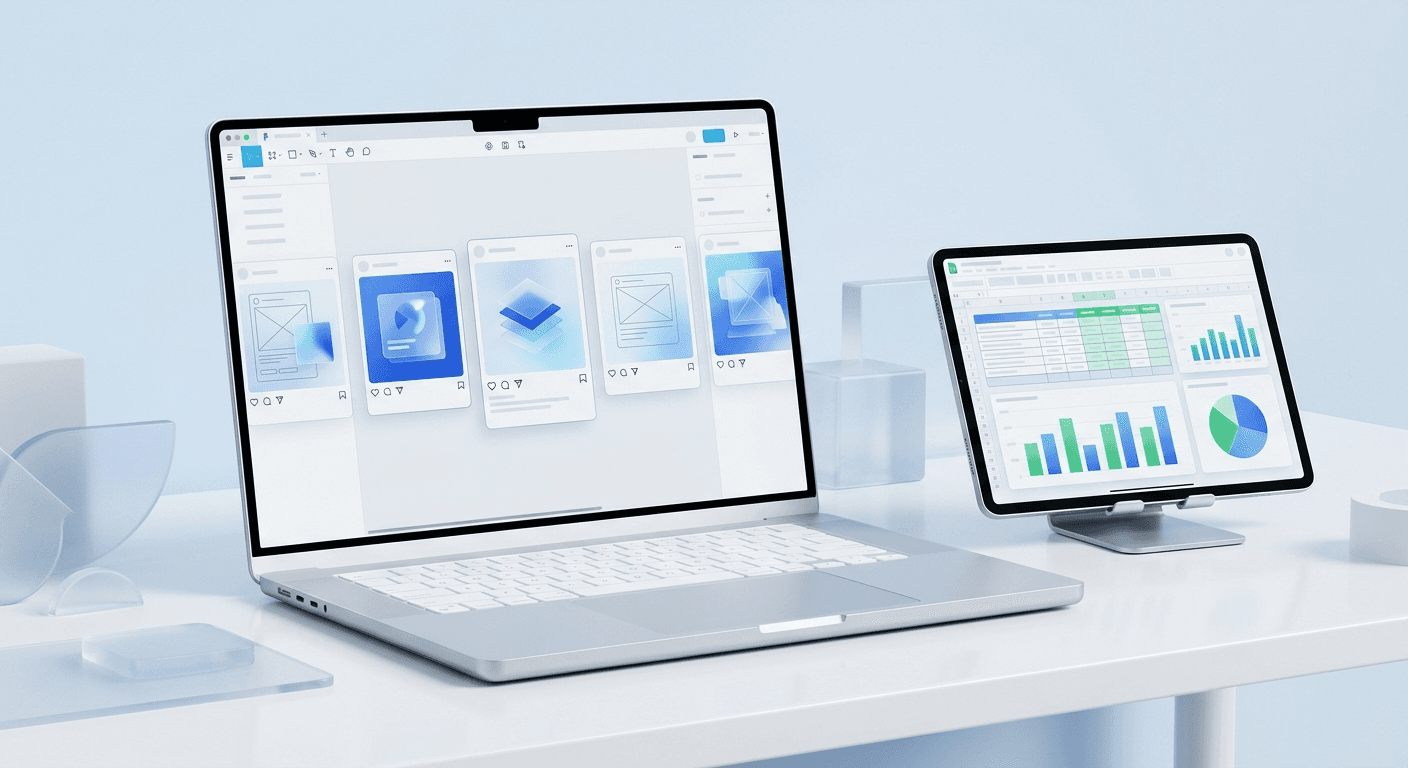
Figma templates reduce design costs by standardizing the production of social media assets and removing the need for professional design skills. A saas social media marketing budget that once went to a freelancer can be cut by 90% using a template system. This shift allows teams to produce a week's worth of content in one hour, drastically reducing the cost per asset.
Standardization is the secret to a premium brand. When every post uses the same grid, typography, and color palette, your profile begins to look like a cohesive product rather than a collection of random thoughts. We built our system to help founders achieve this level of professionalism instantly. Because the templates are built in Figma, they are infinitely customizable but keep the fundamental design principles intact. This prevents non-designers from making choices that could damage brand credibility.
Beyond cost, the biggest benefit is the removal of friction. When a design task feels hard, people procrastinate. When you have a library of proven layouts ready to go, the barrier to publishing is gone. This leads to a more consistent posting schedule, which is the most important factor for organic growth. We see our users go from posting once a month to three times a week because the design part of the job is no longer a chore.
What are the common mistakes in SaaS social media budget planning?
A common mistake in a saas social media marketing budget is over-allocating funds to vanity metrics like follower count. Followers are a lagging indicator of success. The focus should be on engagement and conversion. Another frequent error is ignoring the cost of the founder's time. If a CEO spends ten hours a week struggling with design software, that is thousands of dollars in lost opportunity cost.
Many startups also fall into the trap of using cheap, low-quality templates or offshore design services that do not understand the SaaS aesthetic. The result is content that looks "scammy" and devalues the product. High-end software requires high-end marketing. If your visual content does not match the quality of your UI, you create a cognitive dissonance for the potential buyer. We recommend investing in one high-quality design system and sticking to it for at least 12 months.
Finally, failing to track the performance of different content formats leads to wasted marketing spend. You must be willing to cut what isn't working. If your audience doesn't engage with video, stop making it and move that budget into carousels or long-form writing. Data should drive every budget decision. We review our metrics every 30 days to ensure our resources are being used in the most effective way possible.
How do you measure the success of your social media spend?
Success is measured by a combination of quantitative metrics and qualitative feedback. For SaaS, the most important quantitative metrics are website traffic from social sources, demo signups, and cost per lead. Qualitatively, you should look for "brand mentions" and the quality of people engaging with your posts. If your target buyers are commenting and sharing, your budget is working.
We recommend a tiered approach to reporting. Track weekly engagement to monitor short-term health, and monthly demo signups to monitor business impact. Social media is a long game. It often takes six to nine months of consistent, high-quality posting before you see a significant impact on revenue. Patience is a critical part of the budget strategy. If you expect an instant return, you will likely quit before the compounding effects of organic social begin to take hold.
A well-planned saas social media marketing budget is an investment in your company's future. By focusing on efficiency, design systems, and organic authority, you can build a powerful lead-generation engine that doesn't require a massive advertising spend. Start with the basics, prioritize visual quality, and use systems to scale your output without scaling your costs.